
The SuperDQP Weekly - December 16, 2024
Dopamine's a hell of a drug

HEY GAMERS! YOU LIKE THAT DOPAMINE!? THIS NEWSLETTER’S FULL OF IT! COME AND GET IT! OMNOMNOMNOMNOMNOM
Thanks for reading The SuperDQP Weekly! Subscribe for free to receive new posts and support my work.
A shot, before the chaser
Today’s recommendation is… a YouTube channel?
The main body of my newsletter references Team Fortress 2, a game I have a lot of nostalgia for, but I’ve found difficult to return to for a myriad of reasons. Even though the game has seen many recent much-needed patches to stabilize performance and weed out cheaters, I still have mixed feelings whenever I play it today, from the constant flood of paid loot boxes to the at-times insufferably hateful player base.
(The game also takes up a lot of valuable hard drive space that made it hard to download and update Metaphor: ReFantazio, so…)
This is a shame. Team Fortress 2 struck a beautiful balance between accessibility and the kind of endless depth found in older multiplayer shooters like Quake 3 Arena or Starsiege: Tribes. I spent hours learning how to rocket jump, trick stab, and airblast projectiles. A part of me misses playing all that.
Enter stabby stabby, a TF2 YouTuber with years of experience playing the Spy class. stabby has been uploading compilations of high-level Spy play from the game’s heyday all the way up to the present day, and the clips are an absolute delight.
stabby is playful and cunning in a way that is just mesmerizing to watch. The videos always put a smile on my face, and I’ve found myself living Team Fortress 2 vicariously through them.
(stabby also has impeccable taste in background music, sometimes even composing original music.)
The channel is @stabbyvideo. Check it out if you need something charming and low-effort to watch.
Okay maybe I should elaborate on that dopamine bit at the beginning of the newsletter
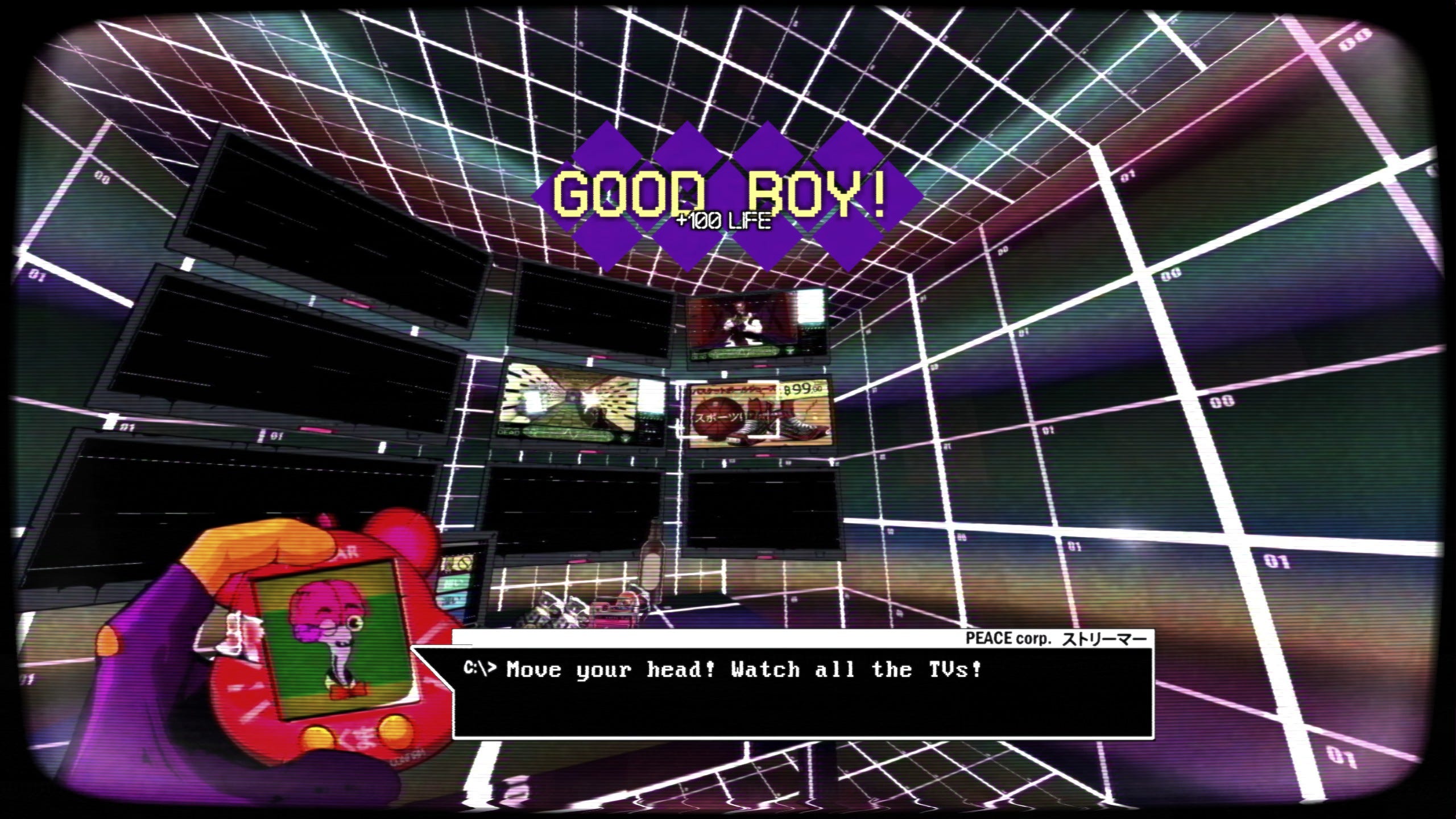
Earlier this year I played a high-octane shooter called Mullet Mad Jack that got my brain fired up and thinking to a degree that it probably did not intend.
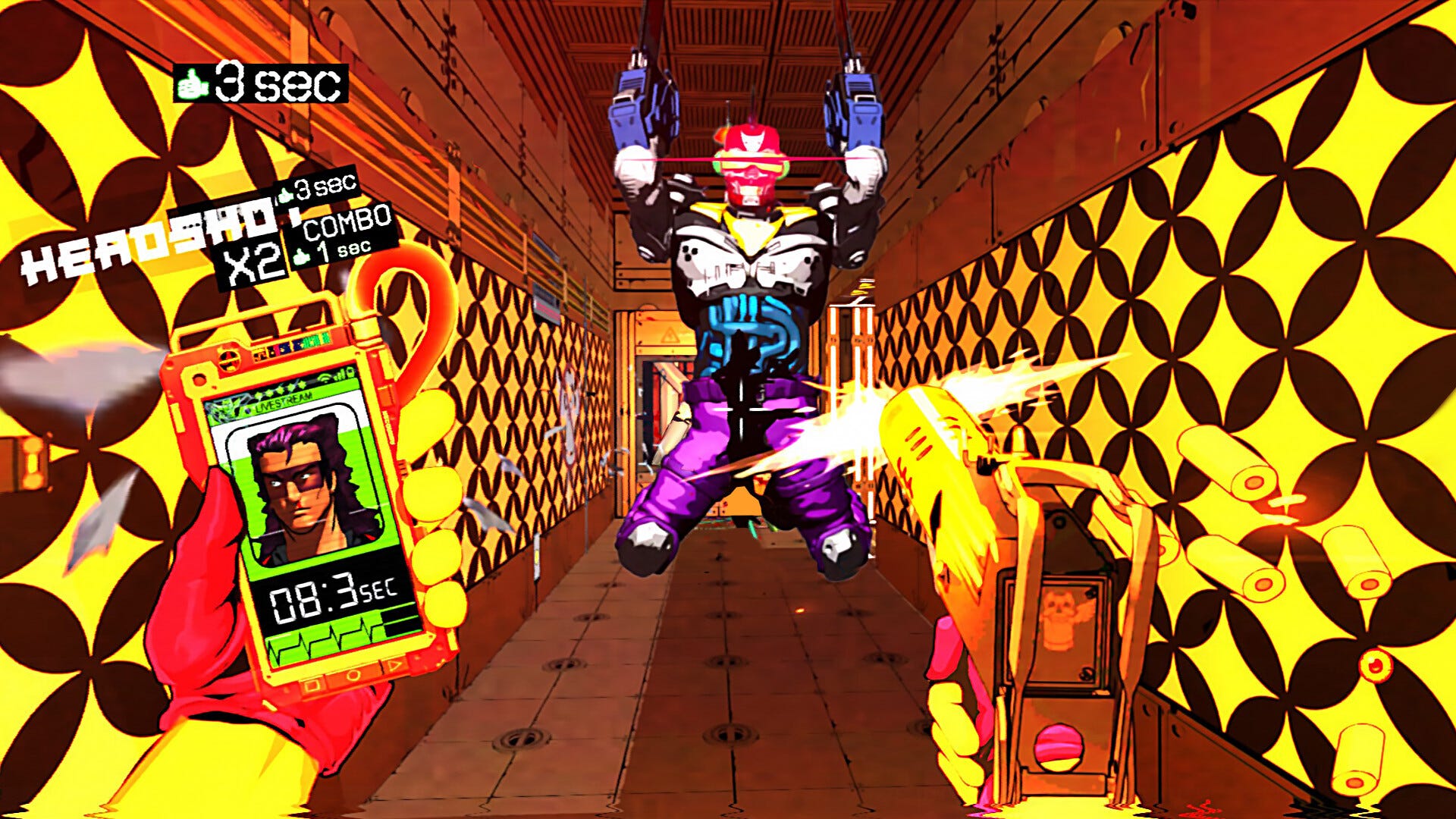
It floods your senses with numbers, lights, sounds, Unreal Tournament-esque announcer quips, and all sorts of other things deliberately designed to get the dopamine receptors in your brain going into overdrive.
The game’s writing leans in on this. Dopamine, in this game, is the protagonist’s literal lifeblood. Characters constantly taunt you on your need and desire for it.
But it only does so in a paper-thin way; this game definitely leans in on John Carmack’s infamous video game writing ethos: “Story in a game is like story in a porn movie. It’s expected to be there, but it’s not that important.”
Beyond the dopamine rush, Mullet Mad Jack honestly doesn’t have much going for it. It’s repetitive and short, and the shooting isn’t terribly interesting aside from the aesthetics blasting information in your face. It is all style and little substance.
So why is it still stuck in my brain?
There’s an article on the satire site Hard Drive that I think of often that Mullet Mad Jack reminded me of:
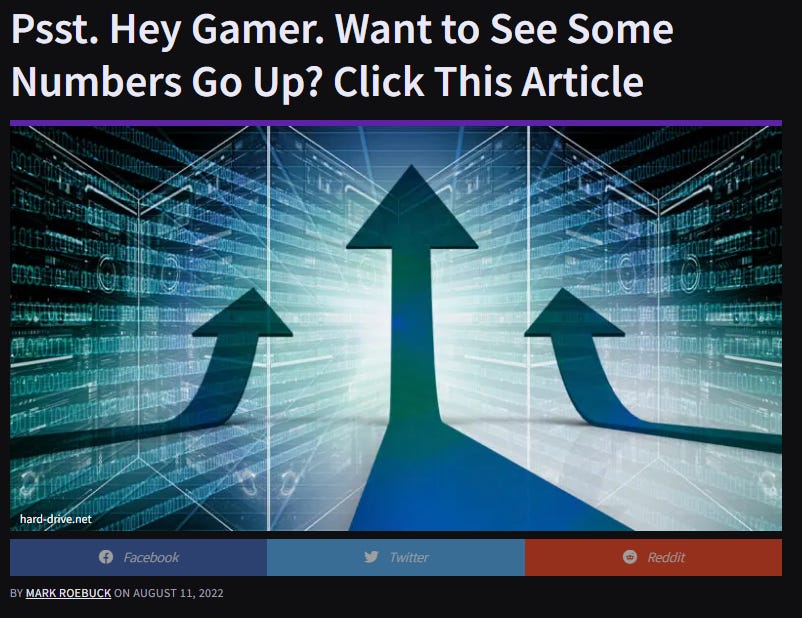
The article cheekily obliges the headline as if it were a drug dealer in a D.A.R.E. PSA. It’s a funny reminder of how many games rely on the simple gameplay loop of numbers going up to entrance players and keep them hooked. Lots of games do that, and in my opinion, there’s no shame in it. Popular movies and books often use action set pieces and sex appeal in the same way.
But recent games like Mullet Mad Jack, Balatro, and Vampire Survivors have stripped their game design down to that core of making number go up to make brain feel good, with every other aspect of the game toned down or shoved to the side, and these games have found massive success in doing so. Balatro even took home some prizes at Geoff Keighley’s Game Awards this last week, for whatever that’s worth.
(I am genuinely happy for LocalThunk, the game’s designer, I just have my grievances with Keighley’s awards show that I won’t share here.)
Of course, these games are far from the first to dress down the idea and present it as nakedly as possible. The clicker game trend, culminating in the absurd Cookie Clicker, made a point of it many years ago. The recent crop merely represents a repeating of history, in this sense.
I have mixed feelings about this trend, and I think Mullet Mad Jack unintentionally stands out among its peers because it pays lip service to how unsettling it is.
MMJ clearly wants you to think critically about how it showers you with dopamine; about how addicting and superficially rewarding it is to play for long stretches of time. It openly teases and mocks players for doing as the game wants them to do.
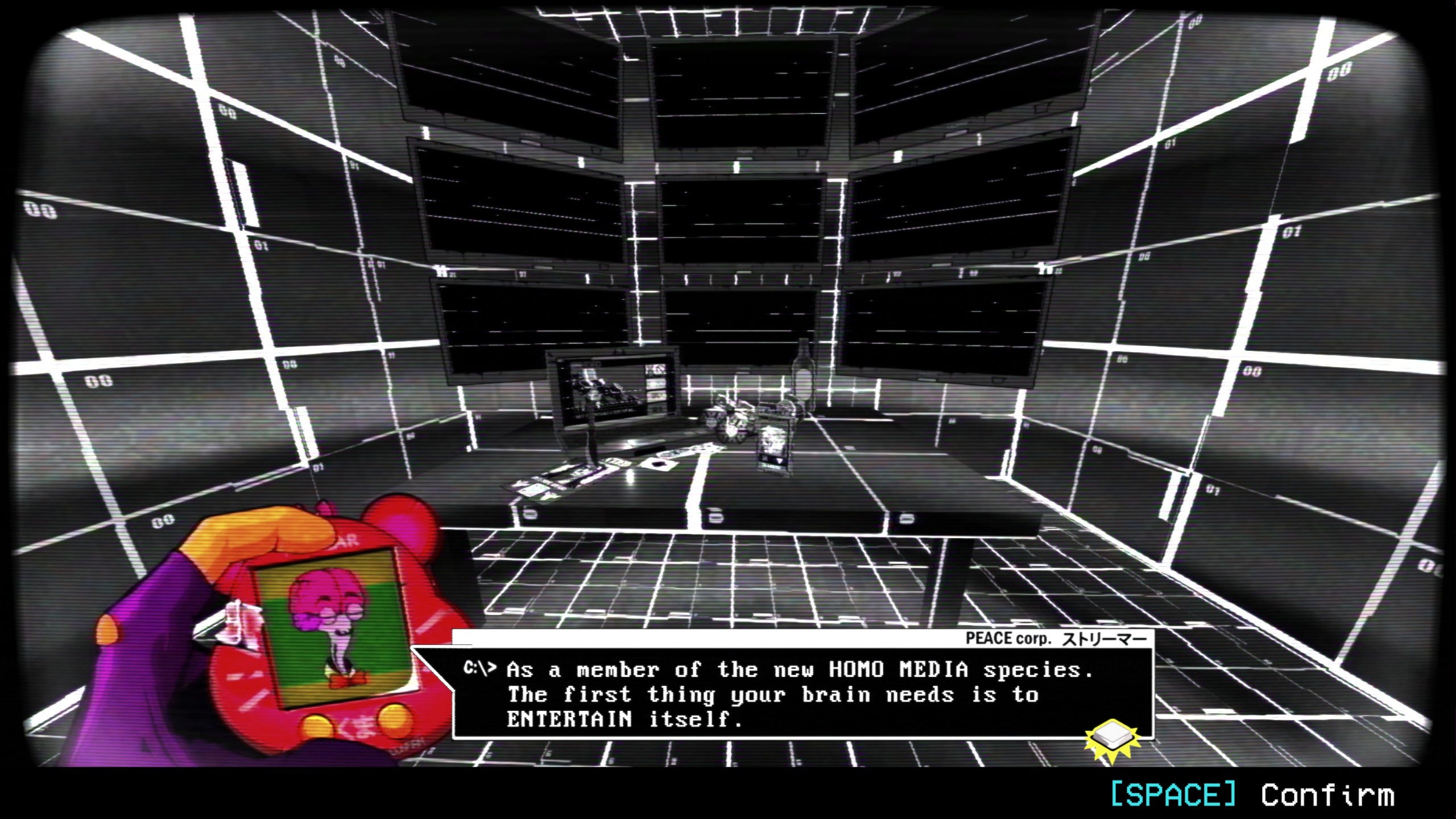
Yet, at the end of the day, it feels empty. Its ending funnels you into an endless mode so that you can keep playing long after the credits roll. Bosses yell at you for succumbing to the dopamine… while shooting you with gatling guns. For as much as the game wants you to think about the nature of dopamine rush games, it still can’t escape being a dopamine rush game, and even then, it doesn’t bother going over-the-top the way that the craziest runs in Balatro or Vampire Survivors can get.
These games leave me feeling kind of empty no matter how over-the-top they get, though, not unlike the feeling of eating an entire family-sized bag of corn chips. In the moment, it feels great, but immediately as soon as I stop, I feel kind of terrible about myself. And generally, I want more from games than that.
That doesn’t make these games bad or undesirable. If I’m burnt out, or tired, or depressed, a game like these can be great. A balanced media diet includes media of consequence; media that moves you or makes you think about things in a new way. But sometimes, a balanced media diet also needs to contain some metaphorical chicken nuggets, so to speak.
I recently told my doctor I was playing The House in Fata Morgana, a game with some very heavy subject matter, and she recommended I find something fluffier as soon as I was done. You need the junk food sometimes.
What scares me is developers’ capacity to exploit this kind of design. And that’s a silver lining that all three of these games – Balatro, Vampire Survivors, and Mullet Mad Jack – have: you pay once for each of them and can play them forever after.
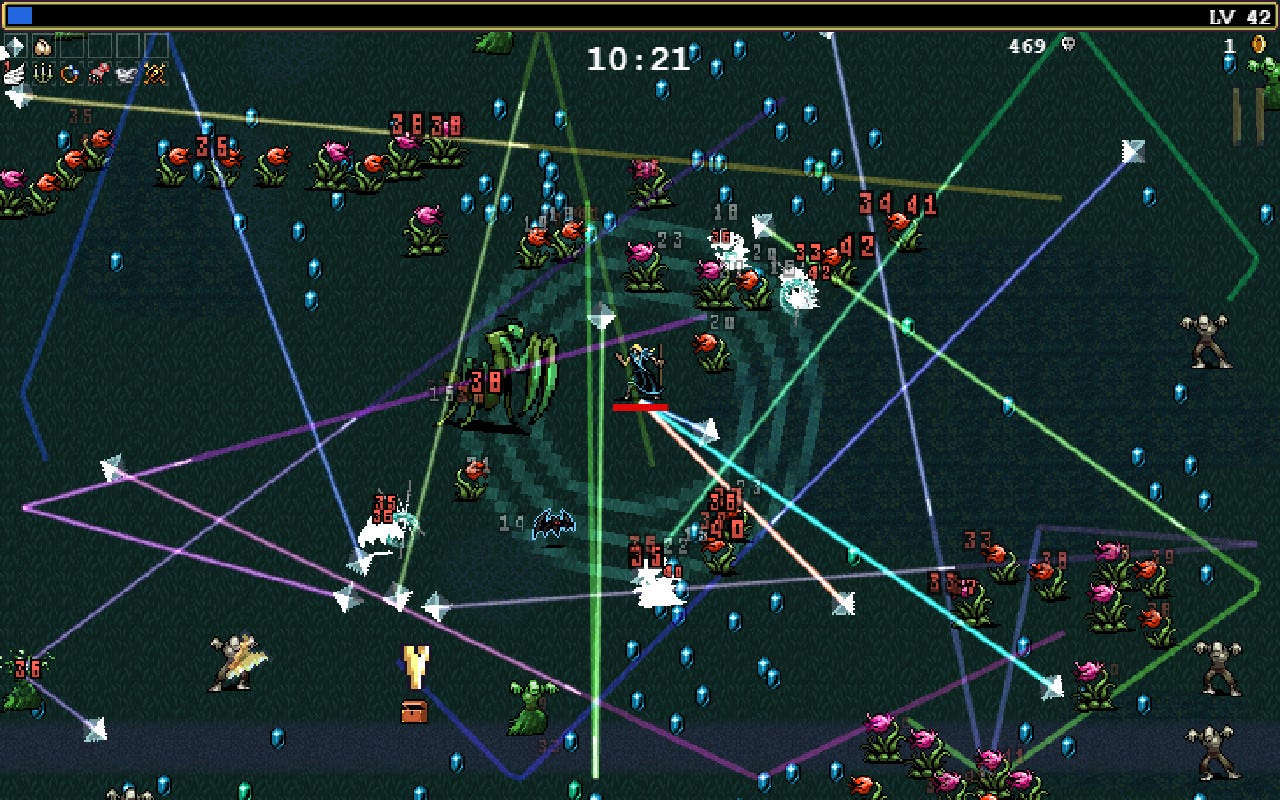
Most other developers will charge you real money for extra lives, or extra time, to financially exploit people who are susceptible to this kind of dopamine-centric design. James Stephanie Sterling produced a video all the way back in 2019 showcasing the harm that more exploitative games have on neurodivergent players and people who struggle with problem gambling.
Speaking for myself — I’m on the autistic spectrum, painting a rather large target on my back for unscrupulous publishers — I’ve found myself addicted to the real-money economies of Team Fortress 2 and Overwatch in the past. God only knows how much money has disappeared into those games, never to be seen again. Today, I find playing or returning to any free-to-play or microtransaction-laden game to be very difficult. I know how much of a sand trap they can be.
Dopamine is terrifyingly easy to take advantage of.
But – and this is something that I feel goes unsaid too often – dopamine is also wonderful, and there is nothing wrong with seeking it out. Dopamine is a natural chemical response in the human brain. We’re supposed to feel it, not forsake it completely. And a video game can make you feel it in many, many different ways. A well-written character arc. An awe-inspiring landscape. A music track that plays at exactly the right time. Yes, numbers going up. Sometimes, all at the same time.
So play another run of Balatro. Don’t feel ashamed of it; the game’s business model is remarkably scrupulous. Just be wary of when someone is using it to sap you dry.
A wishlist recommendation
In keeping with the theme of numbers hypnotically going up, you should check out the demo for Enter the Chronosphere.
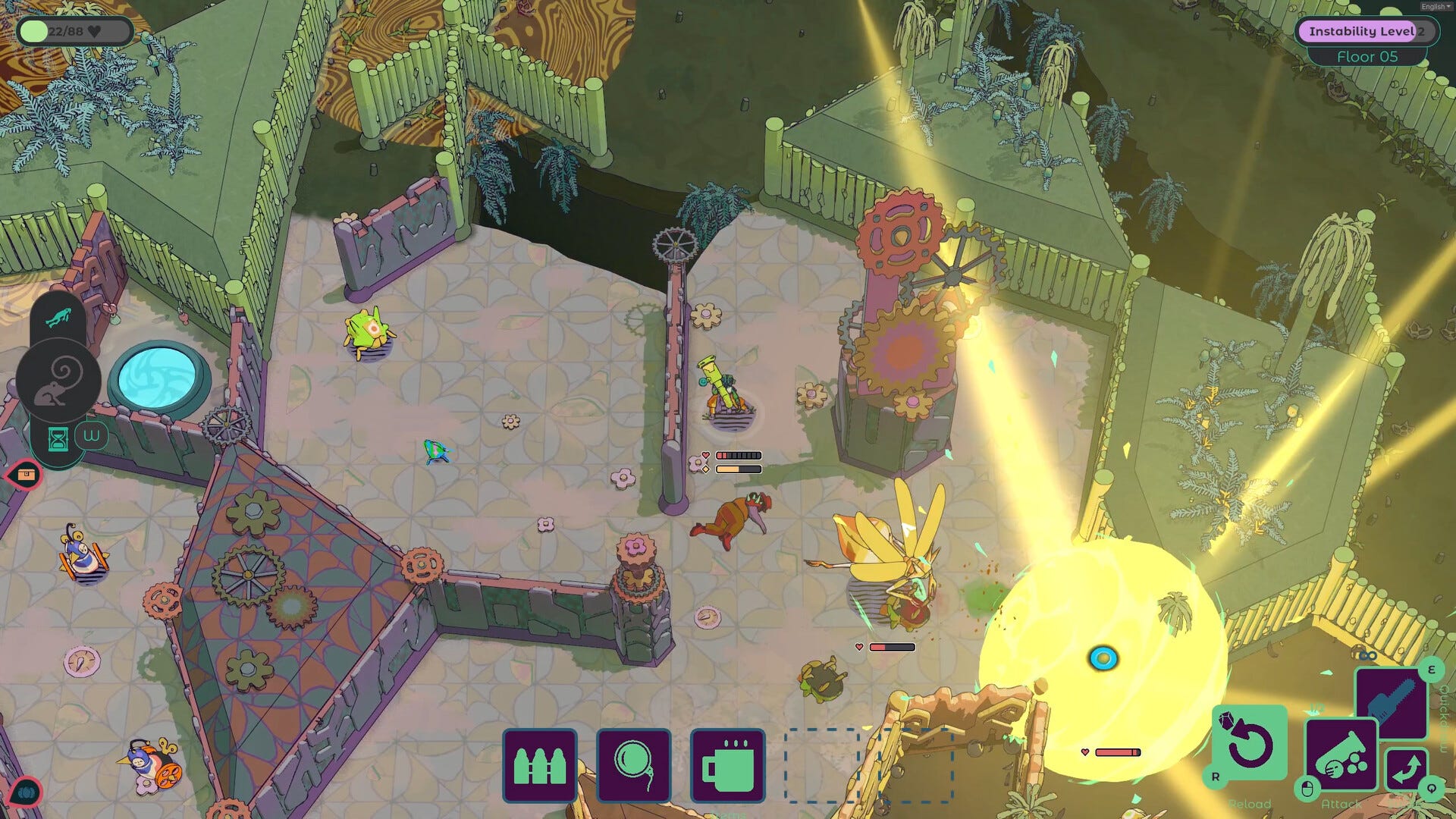
I’m going to keep this week’s recommendation pretty short and sweet; Chronosphere is a bullet-hell action roguelike like many you’ve probably played before; think Enter the Gungeon or Nuclear Throne.
There are a couple twists, though, one of which you may have picked up from the screenshot above: the game has a beautiful psychadelic art style that compliments the action nicely.
The other twist is how the game handles time: it’s turn-based, sort of. Similar to games like SUPERHOT (a game that plays with the idea of dopamine rushes in a more satisfying way than Mullet Mad Jack, I feel compelled to add), time only moves when you dictate it do so, giving you an opportunity to plan your next move. It’s only once you execute those plans that time moves forward and bullets do or don’t hit their targets.
Chronosphere has a captivating loop, and the demo kept me hooked for longer than I’d care to admit. It’s going to be a good time when the full game lands.
Enter the Chronosphere is currently planned for release on Windows PC via Steam.
Thanks for reading The SuperDQP Weekly! Subscribe for free to receive new posts and support my work.