
The SuperDQP Weekly - November 25, 2024
No, "To The Moon" isn't just a crypto meme

Do you remember the 2011 game To The Moon? Did you know it’s a five-game series now? Did you know that the fifth game, released this year, is (in my opinion) one of the most well-written games of 2024? We’re talking about it this week.
A Game Recommendation
Speaking of games with heavy writing and impeccable pixel art, if you’re the kind of person who resonated with Mattie Brice’s “The Dadification of Video Games is Real” article over a decade ago, and are generally tired of the trend of mature, violent games centered around an older man protecting a small child as they journey through harsh worlds – think The Last of Us or the rebooted God of War games – have I got a treat for you this week.
It’s called SANABI, and it viciously deconstructs the lethally-protective-patriarch trope. It’s also a wickedly designed 2D platformer with a grappling hook.
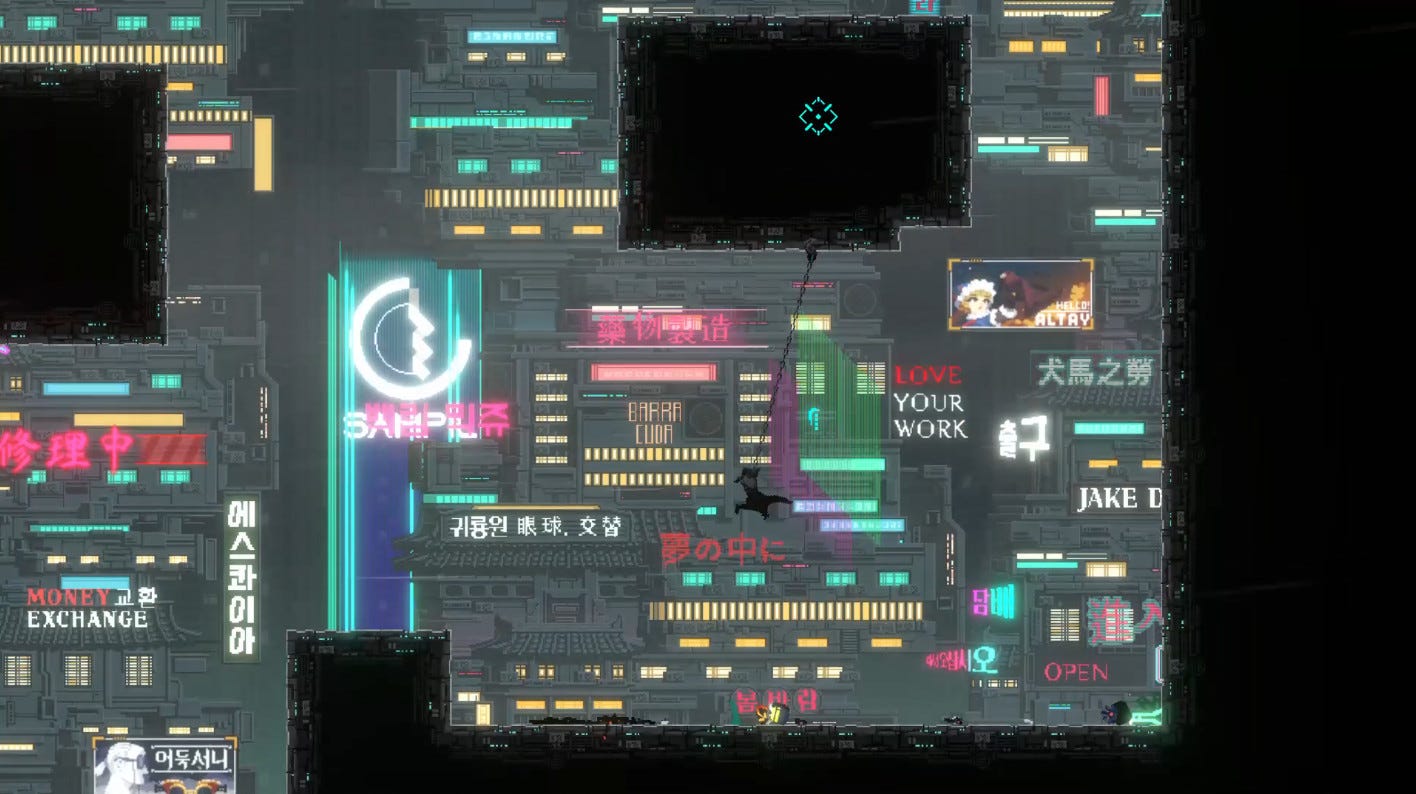
SANABI’s writing cooks, and it knows exactly what expectations players are going into this game with, and how best to manipulate the player according to those expectations. Its narrative unfolds at an unsettling and delicious pace. It knows exactly when and how to pull the rug out from under you.
It’s also gorgeous, with expressive and varied pixel animation and a pounding soundtrack that complement the game’s fast tempo.
And I cannot express this enough, it’s a wickedly designed 2D platformer with a grappling hook. It’s very good at being a wickedly designed 2D platformer with a grappling hook.
An abnormal Beach Episode
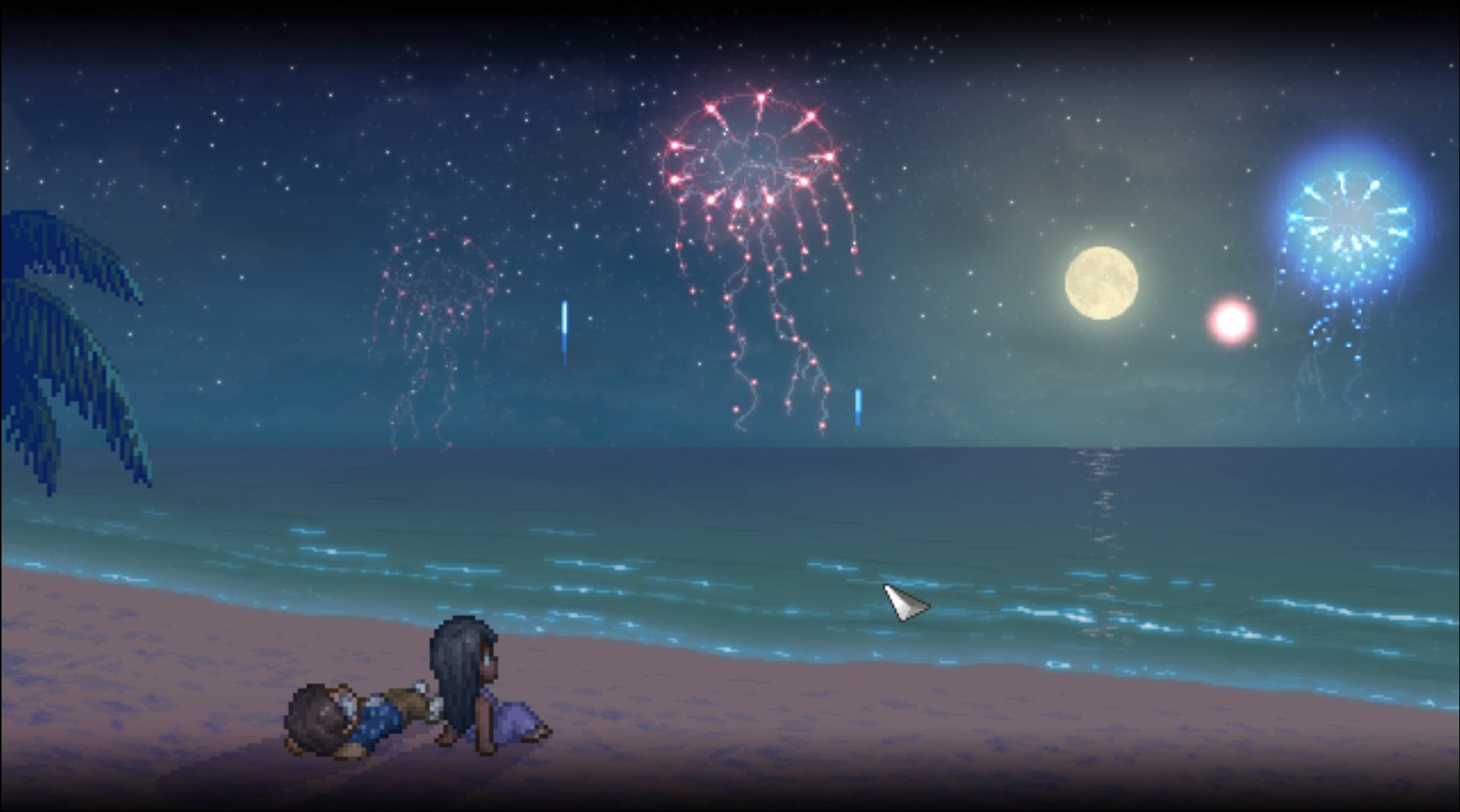
Earlier in September, I played what is probably one of the most heart-wrenching and well-written games of the year: Just A To The Moon Beach Episode.
I’m going to need to back up a bit.
To The Moon is a visual novel based in RPG Maker that came out in 2011, and it was a modest critical and commercial success that spawned a miniature side story and three sequels, including this year’s Beach Episode.
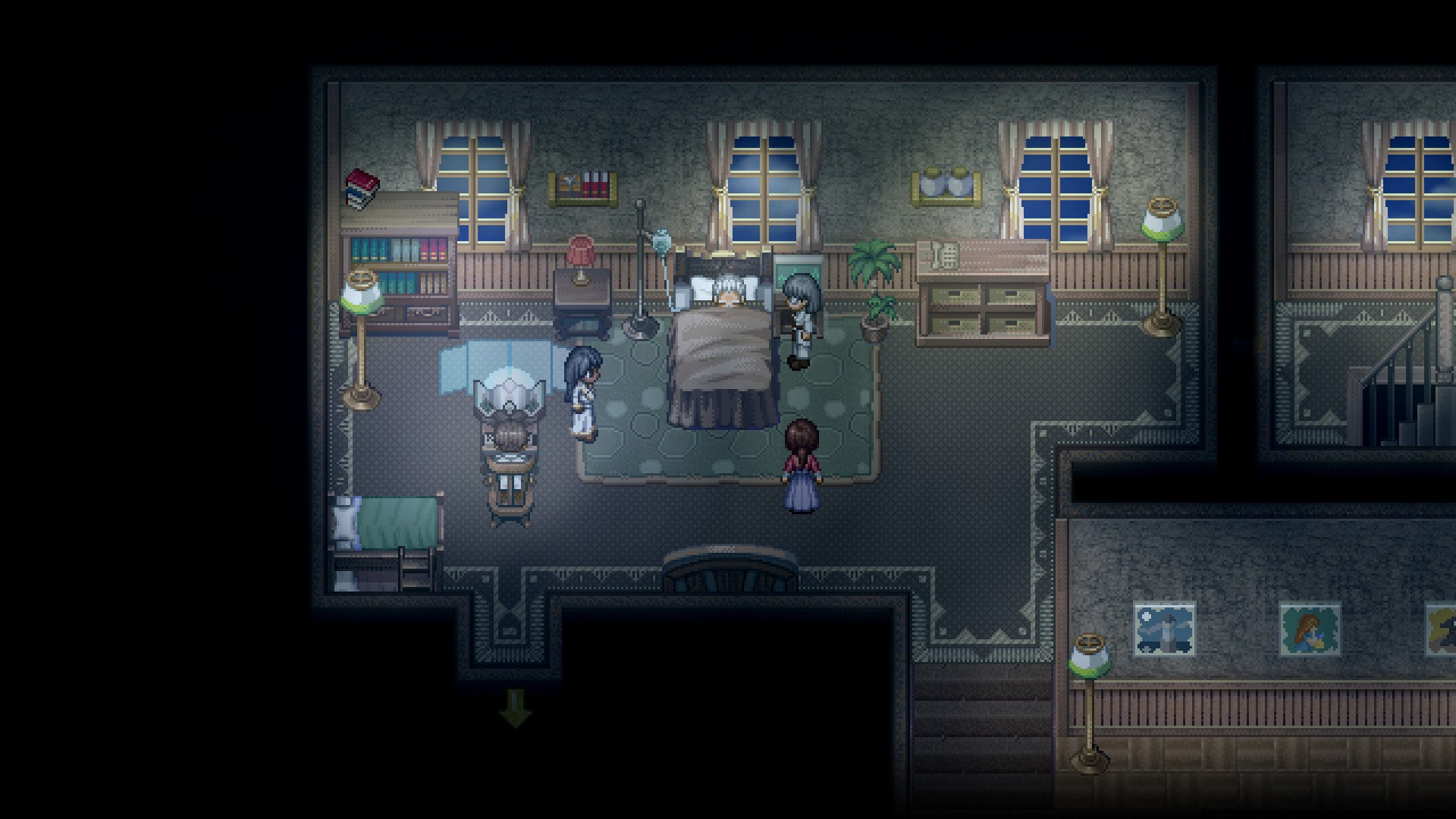
The games follow two scientists from Sigmund Corp, a company that uses technology to modify the memories of dying customers so that, in their heads, they can fulfill their dying wishes, no matter how outlandish they may be. Each game follows a different patient and has the player sifting through their most precious memories trying to piece together what kind of dream logic would be needed to make the impossible possible.
Given that the games are about taking part in a sci-fi psychic Make-A-Wish Foundation, you can probably imagine that the games are often touching and melancholy, and that is certainly true. But there’s one aspect of these games that I had a bit of beef with; one wriggling issue that gave me pause before I could commit my heart fully to the games’ narratives.
Emphasis on “had a bit of beef with,” because what Beach Episode pulled off this year put my misgivings to rest, capping off the series with a depiction of grief so realistic that it left me staring at my computer monitor after closing the game for minutes, just trying to piece myself back together.
Obviously, I’m going to spoil the whole thing here, so if you mind spoilers, you can pick up the five games in the series (To The Moon, A Bird Story, Finding Paradise, Impostor Factory, and Beach Episode) for relatively cheap on Windows PC via Steam. They are all very short, with the longest game taking me about four hours to complete and the shortest a little over an hour. You could probably beat it all in a weekend.
Okay. Spoilers start here and end at the Wishlist Recommendation part of the newsletter. You’ve been warned.
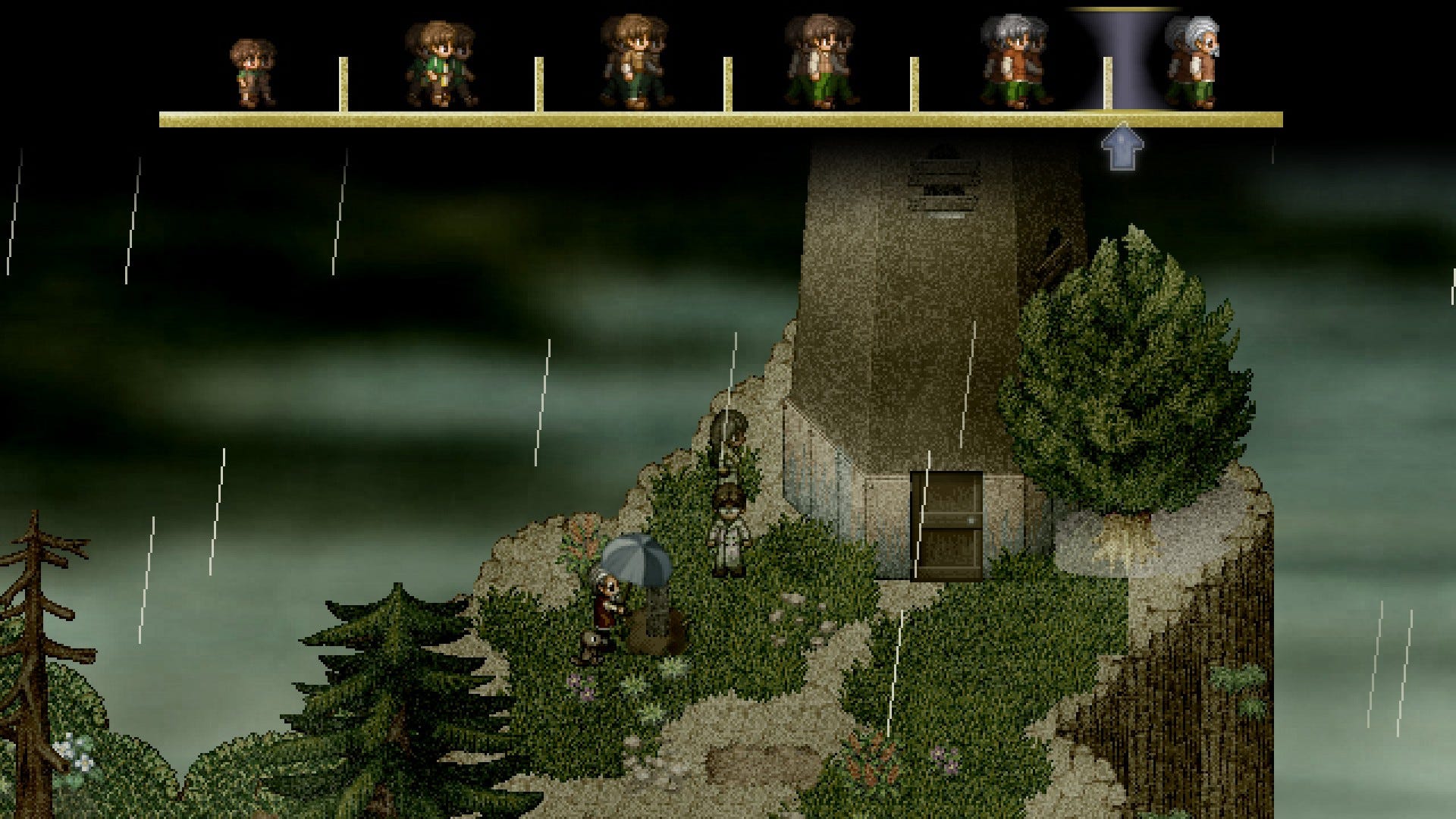
To The Moon is a fascinating game to replay today, because it is steeped in early-2010s internet culture. The writing is full of cheeky references to memes of the era, particularly from Neil Watts, one of the game’s scientist protagonists. He and his colleague Eva Rosalene have a “grounded professional vs. terminally-online goofball” kind of dynamic that can be grating when contrasted with the earnest subject matter of the rest of the game, but any sort of comic relief is still appreciated when making a game centered entirely around death and final wishes.
Still, this isn’t my main beef with the To The Moon series. It can be annoying when played today, but it’s an artifact of its time that probably couldn’t be helped when the first game was being developed in the late-2000s.
To The Moon is a very good, self-contained exploration of a man, Johnny, whose final wish, to travel to the moon (hence the title), is surrounded by a mysterious and tragic past that the sci-fi mechanics of Sigmund Corp serves to facilitate exploring. Eva and Neil act as a Greek choir to Johnny’s life story, watching as it unfolds and only modifying it enough to make the lunar launch possible in Johnny’s mind. The story, though fantastical and filled with interesting technology, is Johnny’s, and his story necessarily comes to a close at the end as he dies happy, his wish fulfilled.
The next follow-up, A Bird Story, is a neat Pixar short of a game about a small boy’s imagination that ends by introducing the problem with this series that I had a beef with: a problem I’ll coin “The Sigmund Cinematic Universe.”
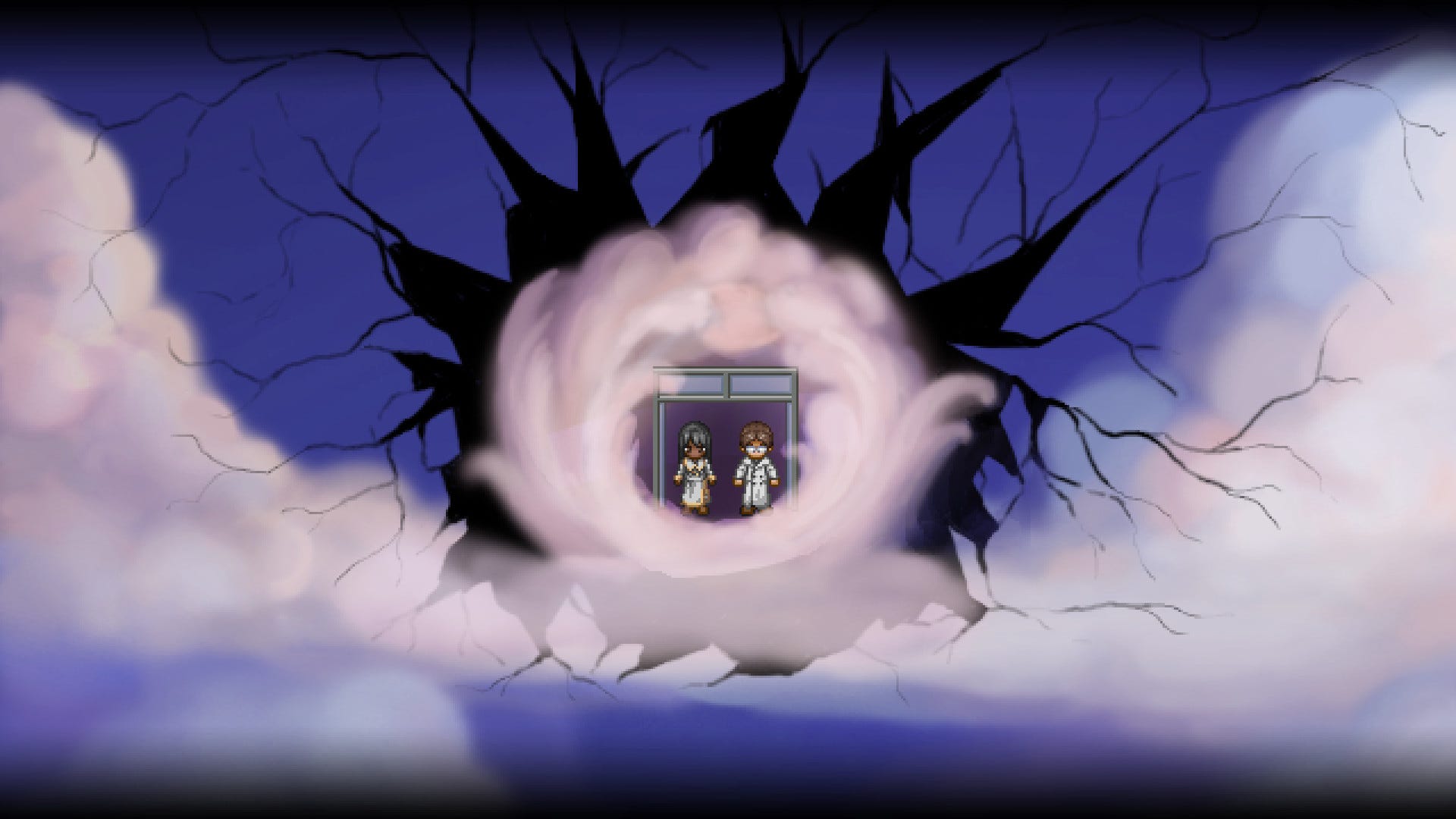
A Bird Story ends with a teaser for the next game, Finding Paradise, revealing that this neat and effective self-contained short, unbeknownst to me when I first bought the game thinking it was standalone, is but a prologue for the true sequel to To The Moon.
Finding Paradise exaggerated this problem by more prominently featuring Eva and Neil as they struggle against a patient’s childhood imaginary friend, Faye, who grows to escape the patient’s mind and ingrain herself into Sigmund’s digital software.
This signaled to me that the games were becoming less concerned with the self-contained stories of their patients than with the less interesting, ongoing drama of the employees of Sigmund Corp.
Faye’s story is interesting, but her ultimate fate (and the Marvel-esque teaser featuring her at the end) kind of undermines the finality and point of the patient’s story in Finding Paradise: that the patient, Colin, already had everything he wished for by the time he asked Sigmund for help, and confronting Faye at the end and letting her go was the key to, well, finding his paradise. (Again, hence the title.)
That Faye remains to make appearances in future games muddles that theme, no matter how interesting Faye’s story may be.
Impostor Factory, in my opinion, continued to stumble in its efforts to establish more Sigmund lore, which admittedly rendered me less able to take its narrative seriously. But Beach Episode, this year, took all of those cameo appearances, all of the snarled lore, and wrapped it up with a beautiful bow, delivering the one thing I think this franchise needed ever since To The Moon got its first sequel: closure.
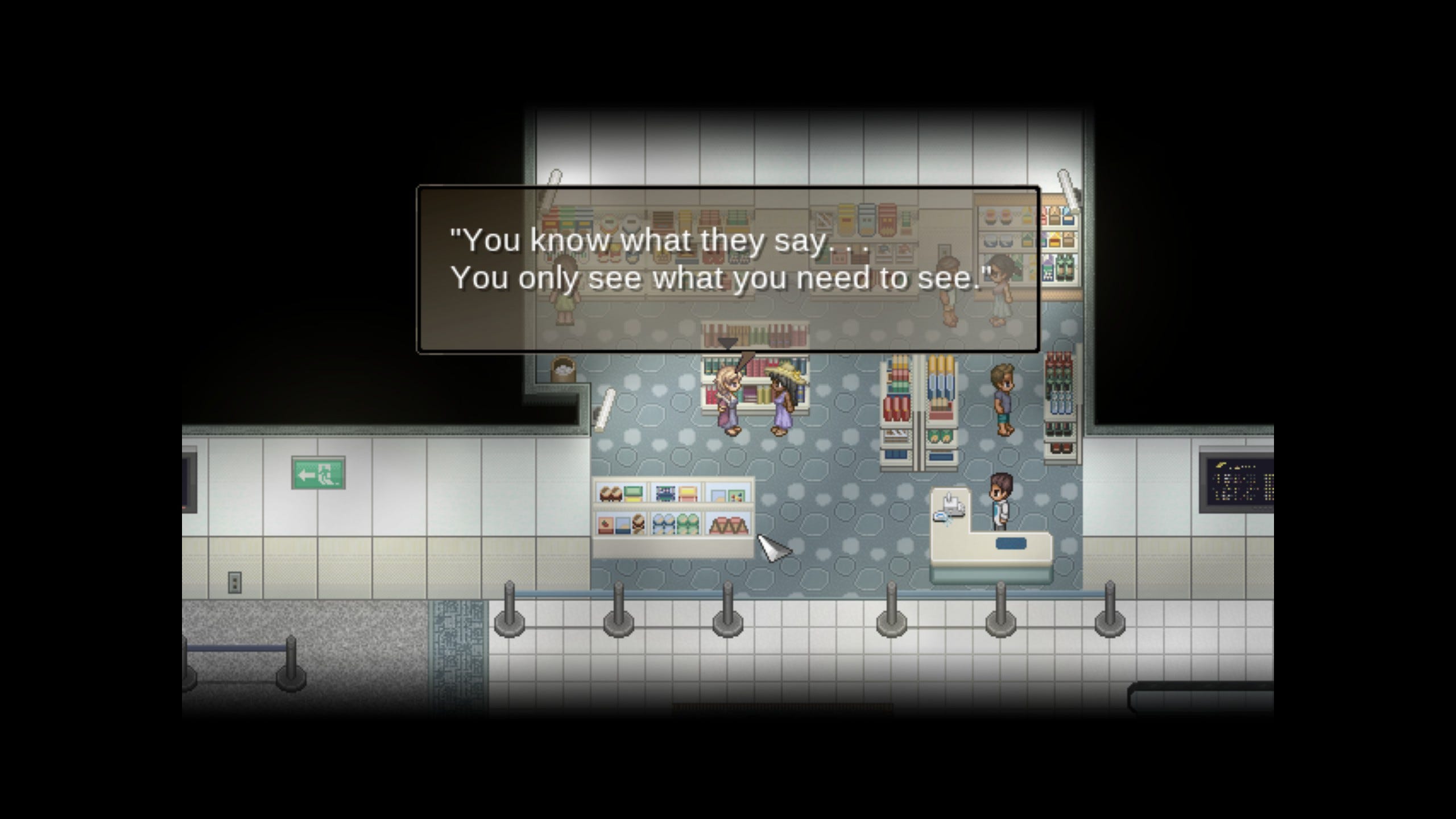
The game (and its Steam store page) constantly tease the fact that something is wrong with this idyllic fanservice episode, but what that “something wrong” turned out to be was an absolute gut punch: Neil is dead, and this Beach Episode, with its minigames and constant cameos from throughout the series, is a pleasant virtual reality that Eva uses to cope, over and over again.
It touches on an aspect of death that the series has left relatively underexplored: the grief of those left behind, of the ones left alive, who loved the dead, and can never truly see them or be with them again. The people who, in the previous games, are typically left on the sidelines as the player fixates on the loved one for whom they are grieving.
These games often fixate on the tragedy of dying rather than the tragedy of watching someone die and living with their memory afterward… until Beach Episode.
It is both a fun romp and a cruel reminder that, for Eva, she can never go back, no matter how much time she spends under the helmet.
It is a painful note to leave the series on, but a necessary one, I feel. For a series that revolves so much around death, it only makes sense, after all, to end on its impact on the living. And after years of flailing and trying to find a way to do so, I’m so pleased that Beach Episode has stuck that landing.
A Wishlist Recommendation
This week’s wishlist recommendation is one of those games that I’m going to recommend you try with as little information going in as possible. And I know those recommendations are difficult to take seriously.
There’s no shame in feeling apprehensive about a recommendation like that, as context can be vitally important when making a purchase decision for a game that may not run well at release.
So, with that in mind, I think that if you’re a fan of Ace Attorney or Danganronpa, of the Devil needs to be on your wishlist right now.
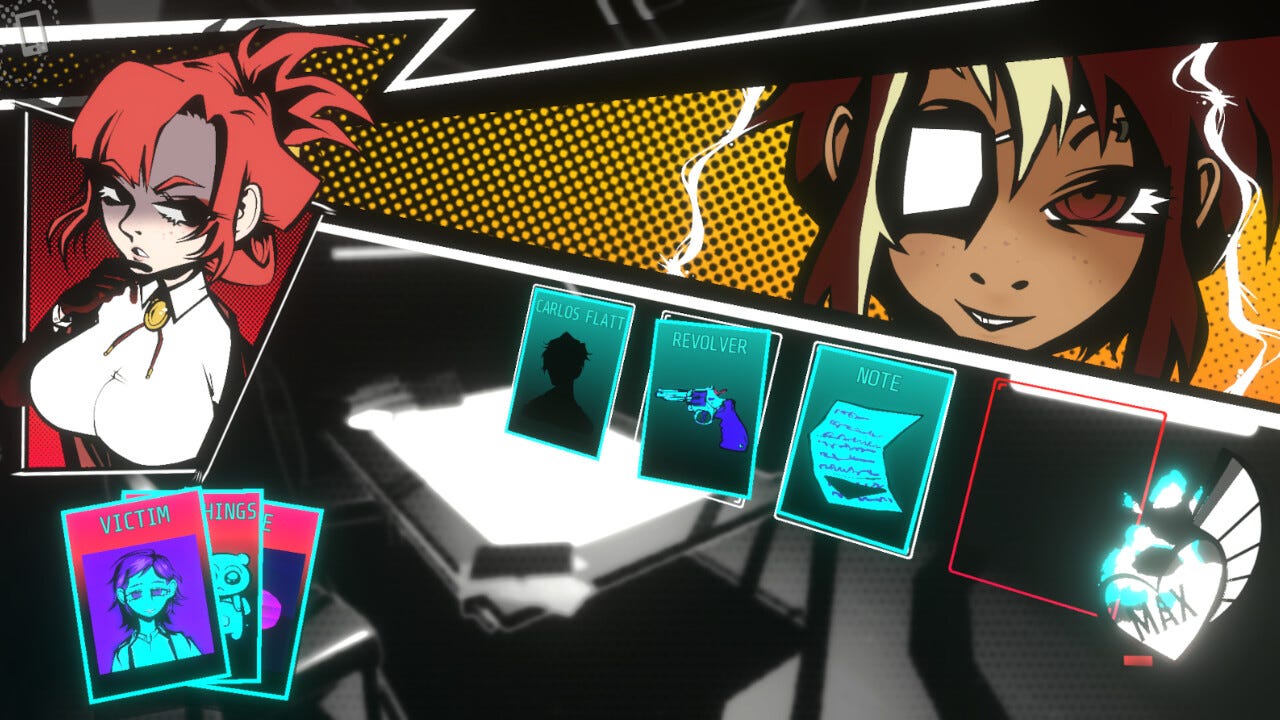
Its demo gives the impression of a top-notch detective game with a killer twist that I would dare not spoil.
of the Devil is currently slated for release on Windows PC via Steam. A demo is available on both Steam and itch.io.
Thanks for reading The SuperDQP Weekly! Subscribe for free to receive new posts and support my work.