
The SuperDQP Weekly - February 10, 2025

I'm forgoing video games this week in favor of documenting a recent visit to the United States Holocaust Memorial Museum in Washington, D.C. Content warnings for everything that sounds like it entails, including fascism, antisemitism, homophobia, transphobia, genocide, and a lot of what's happening in our current political landscape.
A reflection on the United States Holocaust Memorial Museum
The following is a transcription of a Discord post I shared among friends, with some edits for clarity.
A couple weeks ago, I got back from a wonderful vacation in the Baltimore-D.C. area where I got to meet up with dear queer friends and relish in my queerness in a deep way that made me feel affirmed. (I will not be sharing details here.)
But since I was in the area, I capped off the trip – at a friend's suggestion – with a visit to the United States Holocaust Memorial Museum.
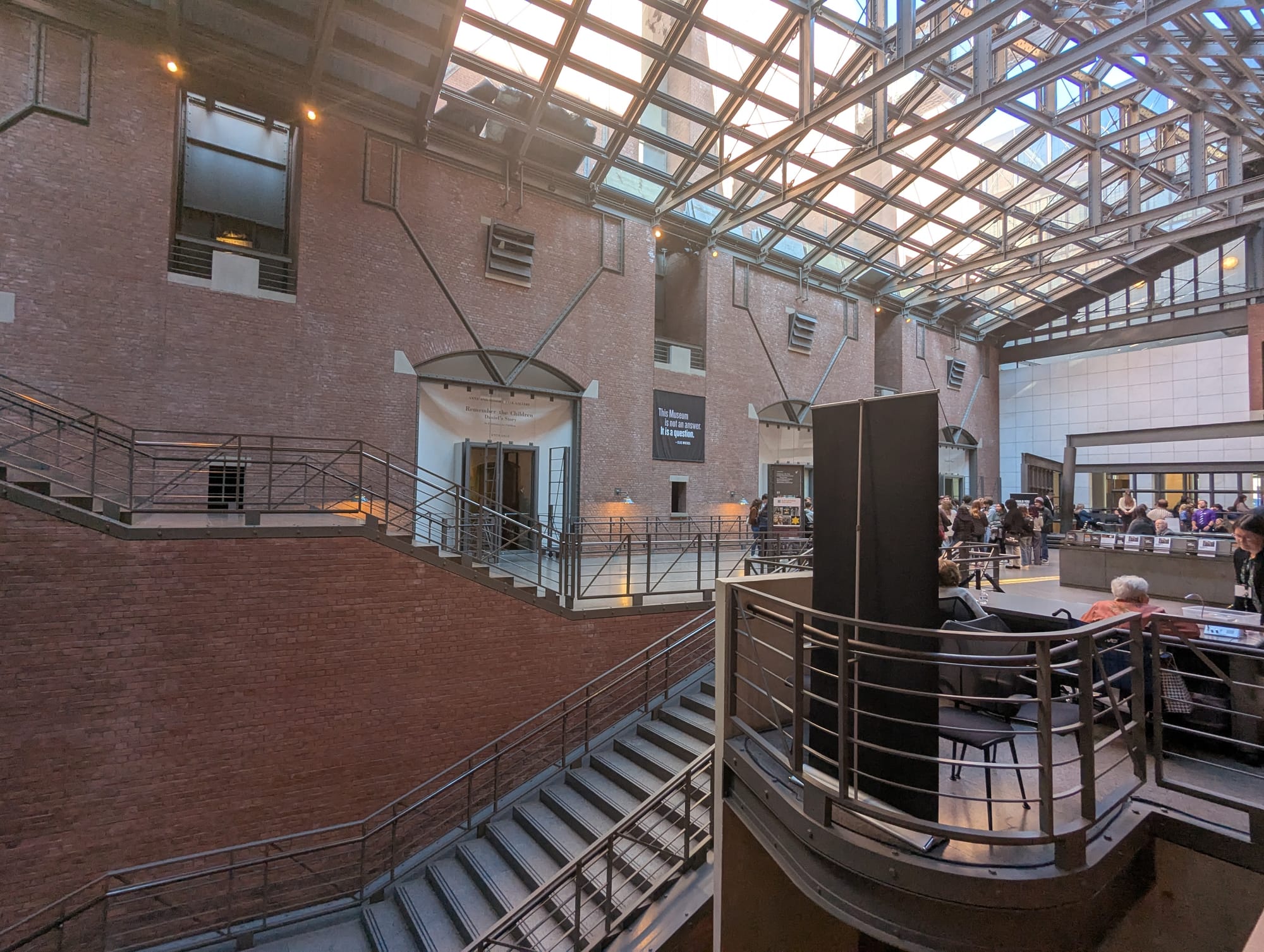
A coincidence that I didn't expect leading up to the trip was that my visit lined up with International Holocaust Remembrance Day, eighty years to the day after the liberation of Auschwitz, and to commemorate the day, the museum had Holocaust survivors sharing their stories in-person. Most if not all of them were young children and infants when the worst violence came to pass. One person told the story of her parents desperately getting her into foster care and successfully keeping her oblivious to the horrors of the Holocaust. Another told the story of a diary he kept that went missing and was eventually published as a book against his consent. Another's father worked with a famous World War II photographer.
But a survivor encounter that stuck with me was an older man who I caught mid-screed. He was telling young people, some of whom were children, about how violence against any broad group cannot be tolerated if the Holocaust is never to be repeated. How, for persecuted groups, self-care and avoidance are paramount courses of action, and that hateful people cannot be convinced or saved, only avoided.
I stood there, wearing a scarf in non-binary flag colors and a they/them pin, and though this was advice I had already heard before visiting the museum, hearing it directly from the mouth of a Holocaust survivor had an effect on me, especially at this point in time.
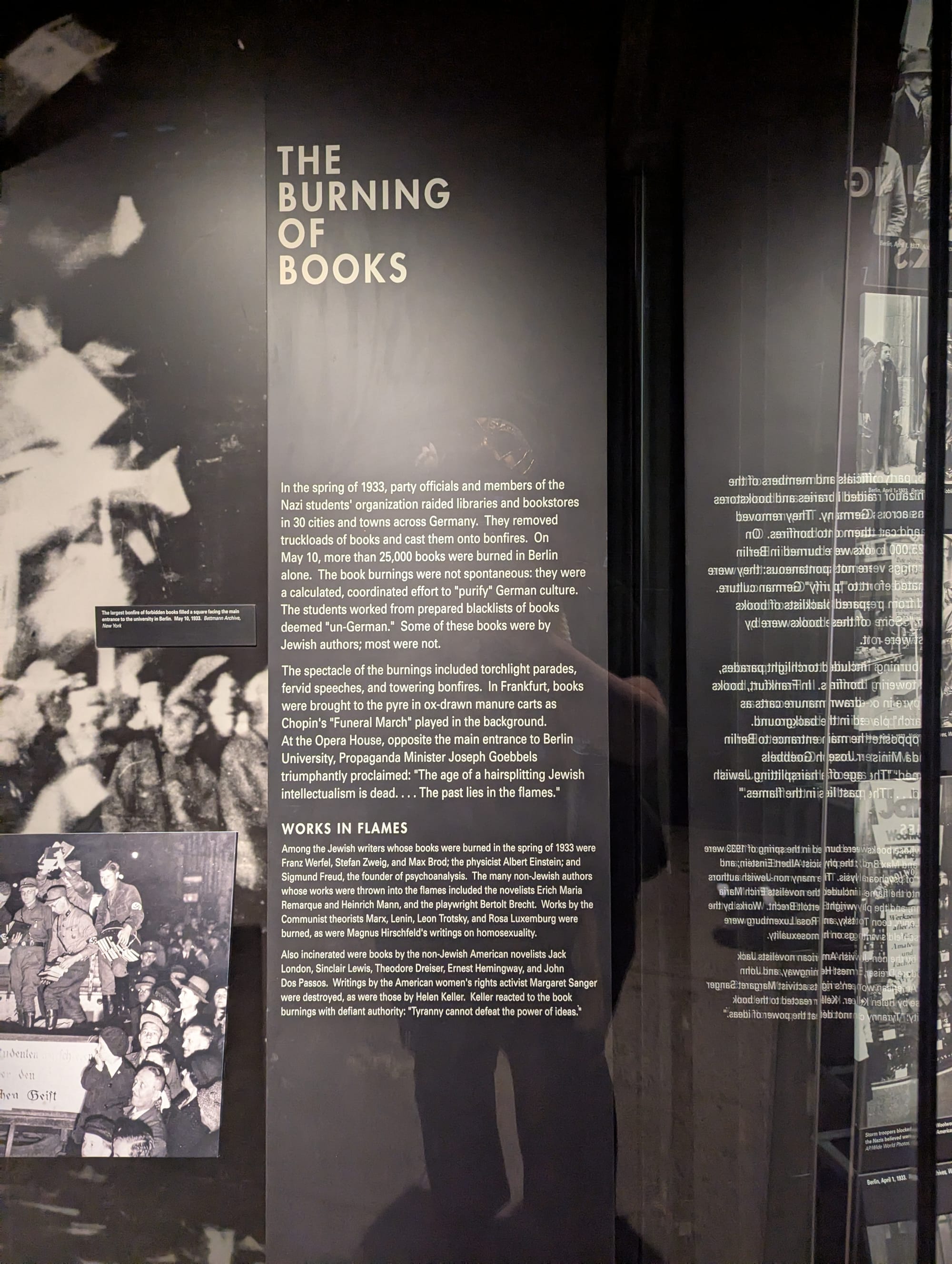
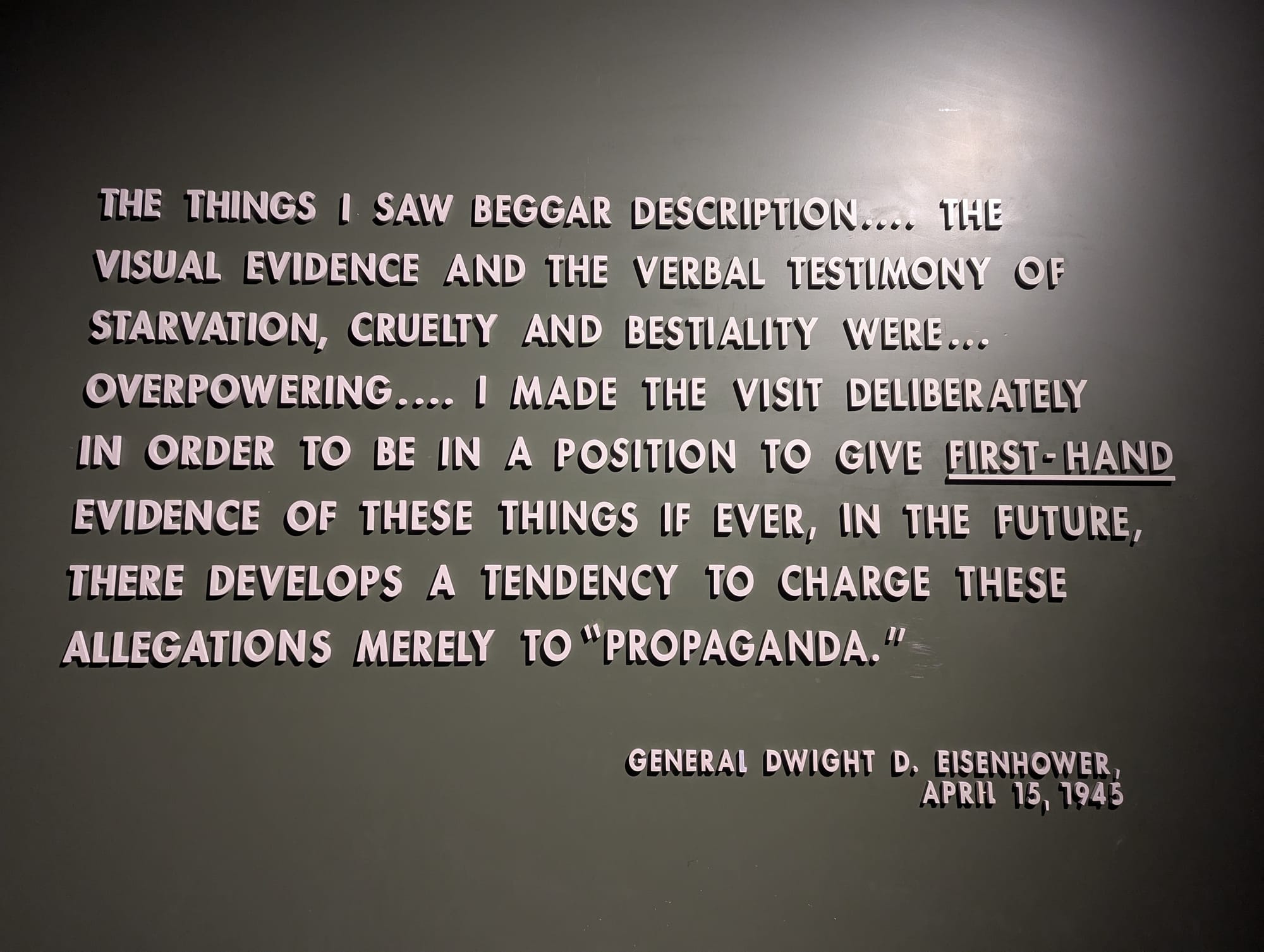
The survivors lined the earlier parts of the exhibits, which started with the U.S. army's discovery of and reaction to the concentration camps, and then went back in time to cover the rise to power of the NSDAP and their use of propaganda, dehumanization, and othering; stuff that obviously brings a lot of the current presidential administration's rhetoric to mind.
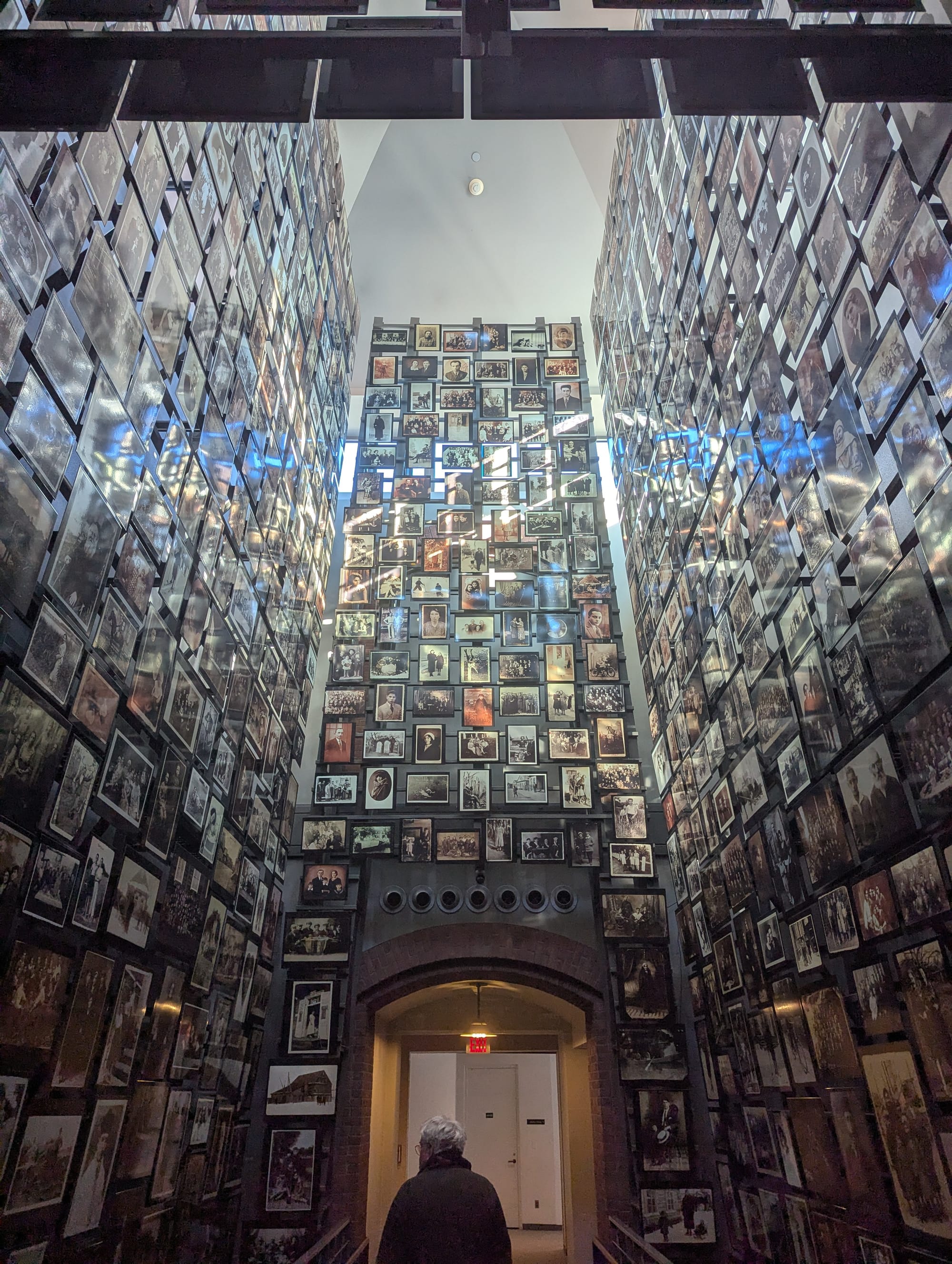
It also covered Jewish life at the time, with a couple rooms filled with photographs from shtetls, small predominantly Jewish communities. I think this aspect of it is one of the bigger sticking points for me of this museum; that these people continued trying to live, holding on to their humanity as best they could as the Nazis did everything in their power to take it from them.
The later parts of the exhibit, portraying the camps and ghettos, along with resistance to the Third Reich – both successful and unsuccessful – will haunt me for the rest of my life. Again, it wasn't a lot of information that I didn't already know, but I think that seeing, hearing, and especially smelling a lot of the materials grounded this atrocity as something that actually happened. Small things, like the creak of barracks wood, the inhumane darkness of the train car, the collections of items that victims brought to camps in the vain belief that they were being simply relocated and not brutally murdered.
The shoes. I remember getting hit by the leather smell of the piles on piles of stolen shoes before I even saw them. It just about stopped my heart in place.
I remember when I saw The Zone of Interest, the shots of stolen shoes had a similar impact, but seeing them in person and smelling the overwhelming stench of aging leather gave it a grounding impact that I was unprepared for.
I cried and panicked at multiple points throughout the exhibition. Not a lot of the actual information was new to me, but I was still shocked and stunned and horrified. Seeing it in person filled me with violent and fearful emotions that cannot be replicated by simply reading about it.
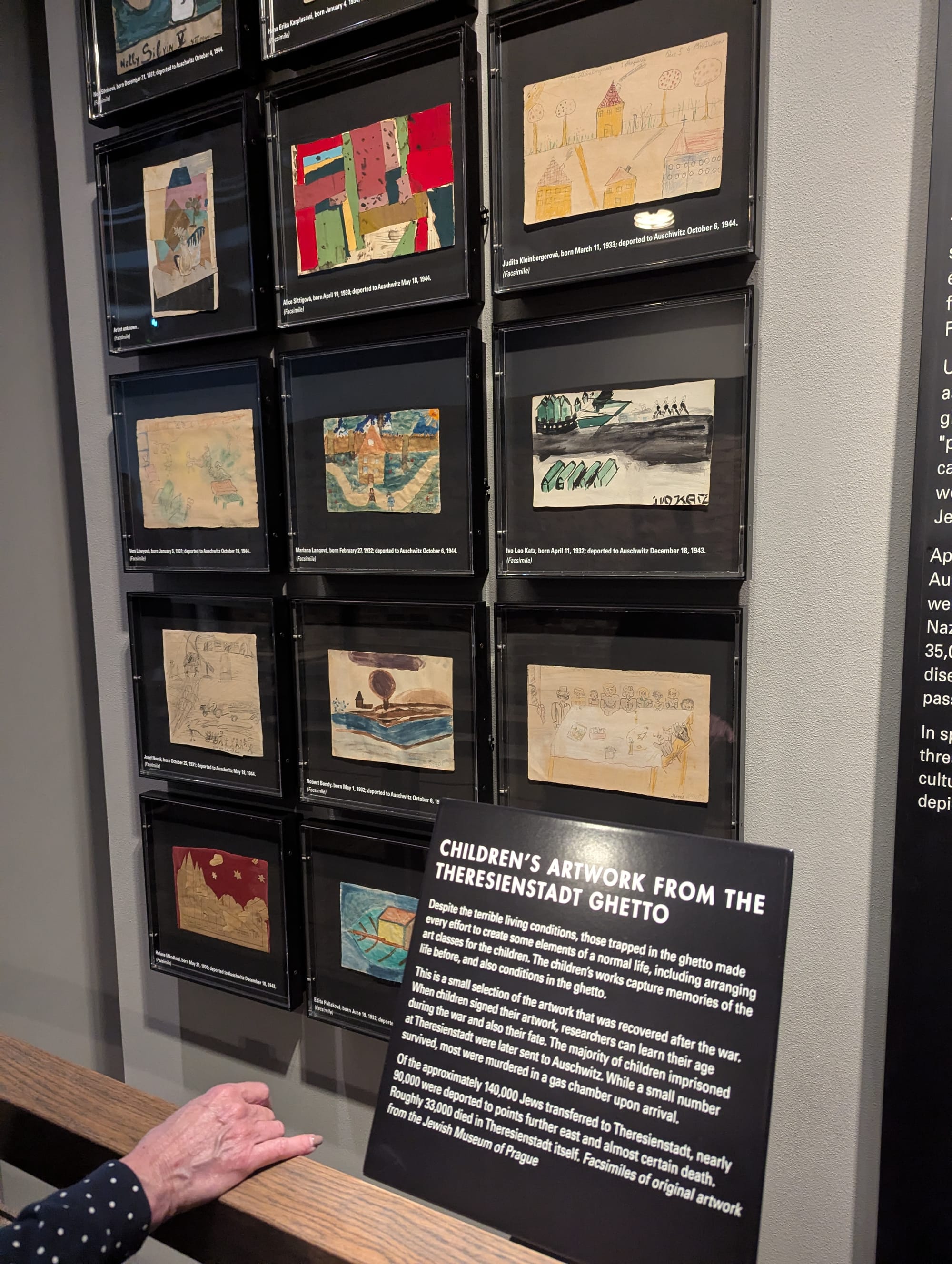
The exhibition ended with a memorial hall dedicated to the memory of those who perished, and because that day was International Holocaust Remembrance Day, I entered in the middle of an hours-long ceremony where they read names and the locations of their deaths out loud. I didn't and couldn't stay for all of it.
Finally, at the very end, they asked me to fill out a card to be posted publicly about something I took away from the museum. I responded with something that I've expressed while talking about New Year's resolutions, and was reinforced after a beautiful, confident, and affirming week with close queer folk, and further reinforced by seeing the stories of Jewish people who, despite the horrors surrounding them, did their best to hold on to their humanity and not let the Nazis dehumanize them completely.
"As a queer person, I'm going to hold onto myself and express myself authentically for as long as I live."
Be my death decades from now, or soon at the hands of institutionalized hatred, I will hold on to my humanity, my identity, and myself, until the moment my corpse can grip them no longer.
Innuendo Studios released a video that same day about the phrase "crossing the Rubicon," which I watched during an extended layover on my way home, that put a lot of my feelings into focus.
A common mantra surrounding Holocaust remembrance is "never again." We teach our children about these atrocities not out of a sense of guilt, but out of a sense of responsibility, so that they can never allow this history to repeat ever again.
I worry, as the video does, that we are past the point of "never again" and have been for a long time. We've watched the Trump administration sign executive order after order against the rights of immigrants and transgender people, even going as far as to attempt to rescind the birthright citizenship established in the 14th amendment.
His order detailing a future transgender ban in the military declares that being transgender is incompatible with the "humility and selflessness" associated with the military. That right there is the kind of othering rhetoric that I literally saw shown in a national museum warning against the danger of radical, institutionalized hatred. We've moved beyond the euphemisms of "medical safety" and "protecting children." Transgender people are now "dishonest" and "dishonorable." The language is already here, straight from the sitting president's mouth.
And I'm really scared. I visited this exhibition and saw immediate, present, obvious, very clear parallels. It may be a bit gauche, to look upon the horrors afflicted upon the Jewish and Roma diasporas as someone who is neither of those things, and imagine myself in those train cars or work camps. But that's a not-insignificant part of why my heart stopped cold at multiple points at this museum.
I stand by my New Year's resolution: to thrive, or at least, to try my damnedest to. I'm going to take every opportunity that I can get to do so. This trip was one such opportunity and I do not regret seizing it and reveling in it.
But that doesn't make me any less scared.