
The SuperDQP Weekly - February 24, 2025

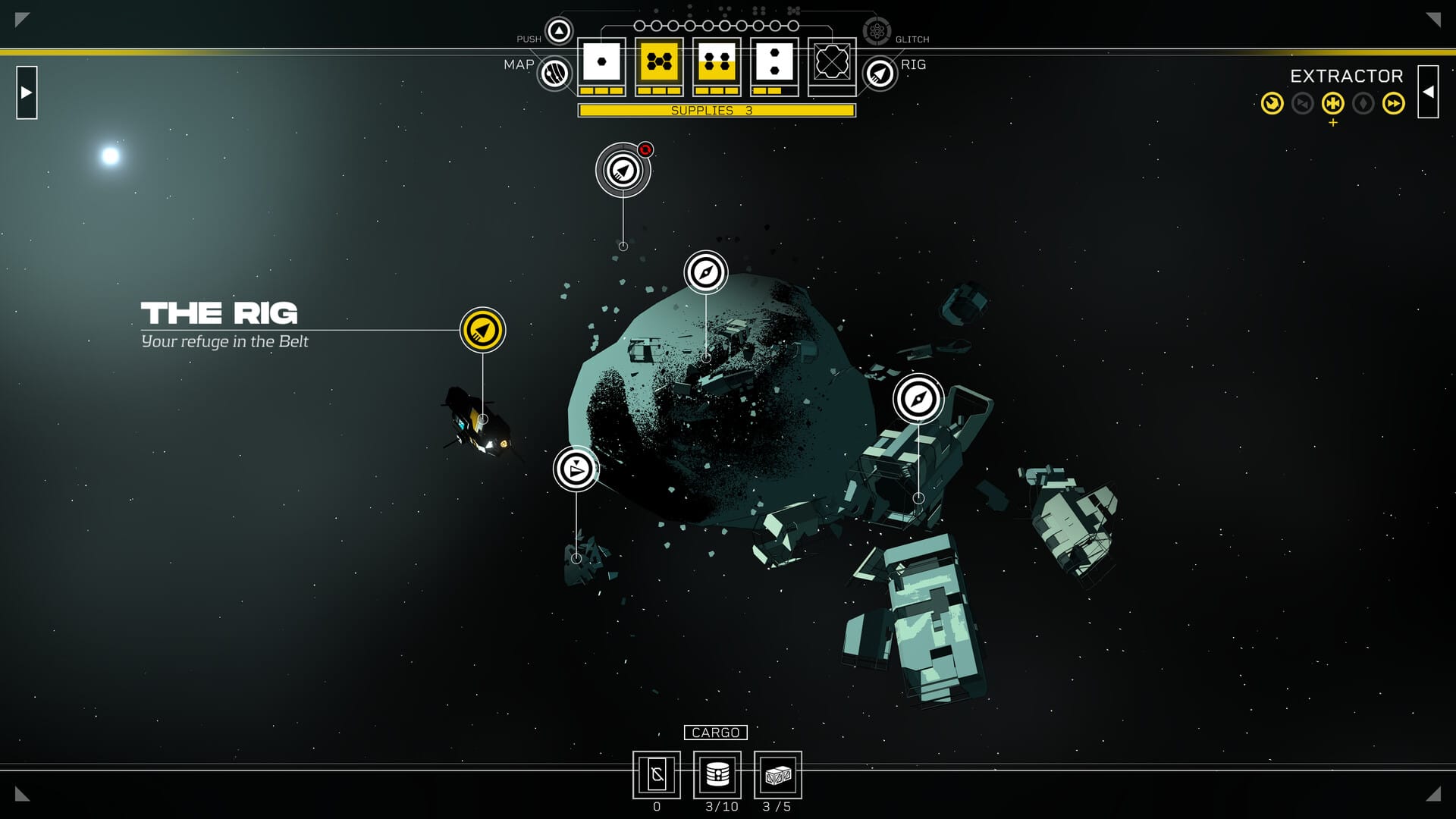
I've been playing Citizen Sleeper 2: Starward Vector here and there since it came out, and it's brought to mind a lot of what the cyberpunk subgenre means to me, personally. Let's hack in. (Or not. My CS2 character isn't a hacker. This metaphor doesn't really work here.)
A mod recommendation
A little over a month ago, I wrote about my experiences with depression and briefly mentioned the Paper Mario 64 Randomizer mod, which was a delight to play. Paper Mario was a foundational game for me growing up, and I find myself returning to it whenever I need something comfortable and low-effort to play.
It’s a good thing, then, that the game has a surprisingly robust modding scene, with extensive tools and recently decompiled source code. And this week, I want to recommend a mod that’s had my attention for the past couple weeks: elDexter’s Paper Mario: Black Pit.
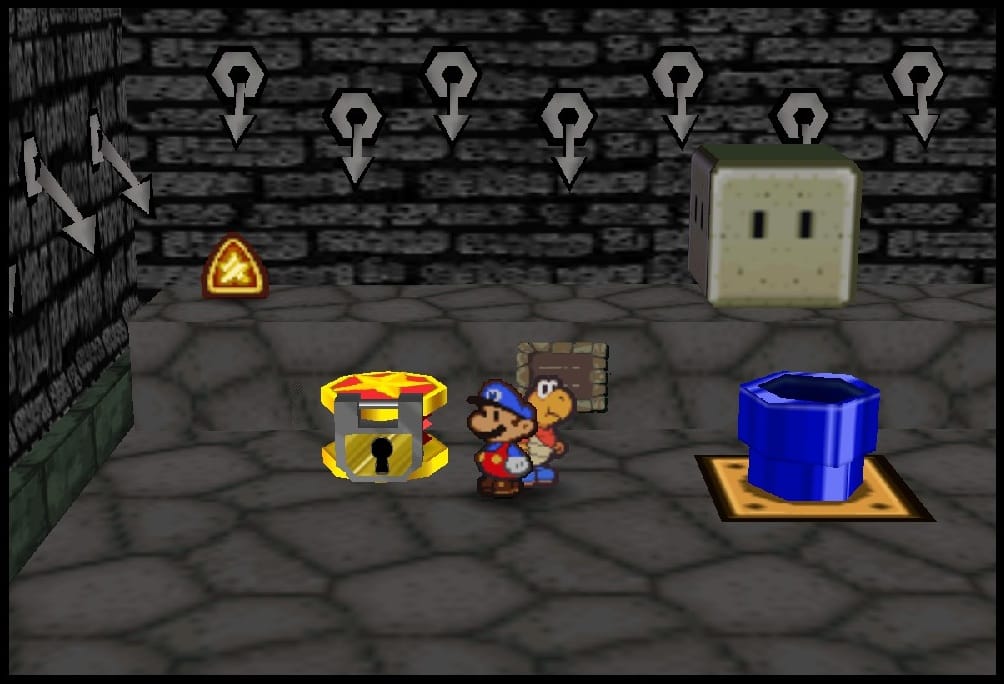
Black Pit takes the concept of the Pit of 100 Trials – an optional challenge in Thousand-Year Door and Super Paper Mario – and retrofits it into the original Paper Mario with roguelike and roguelite mechanics. There are two pits: a “Classic” pit that lets you keep badges, upgrades, and partners earned throughout the game, and a “Roguelike” pit, which wipes the slate clean every run and offers you temporary, randomized upgrades as it goes. (The Roguelike pit is pictured above.)
It works surprisingly well, though the early game is very slow and grindy until you attain more permanent upgrades and gain more agency in fights.
Still, Black Pit is a good time. I’ve been playing a loooooooot of it. Somehow a game about digging deeper into a giant brutal pit in the impossible hope of finding your way out is resonating with me right now.
Paper Mario: Black Pit is available here. A valid, legally-obtained ROM of Paper Mario is required, along with an emulator to play it on.
The meaning of cyberpunk fiction (according to me, anyway)
Citizen Sleeper 2: Starward Vector, my most anticipated title of 2025, is out, and though I haven’t finished it as of this writing – life is a lot right now and I am dealing with some vicious executive dysfunction – the game is living up to my excitement so far.
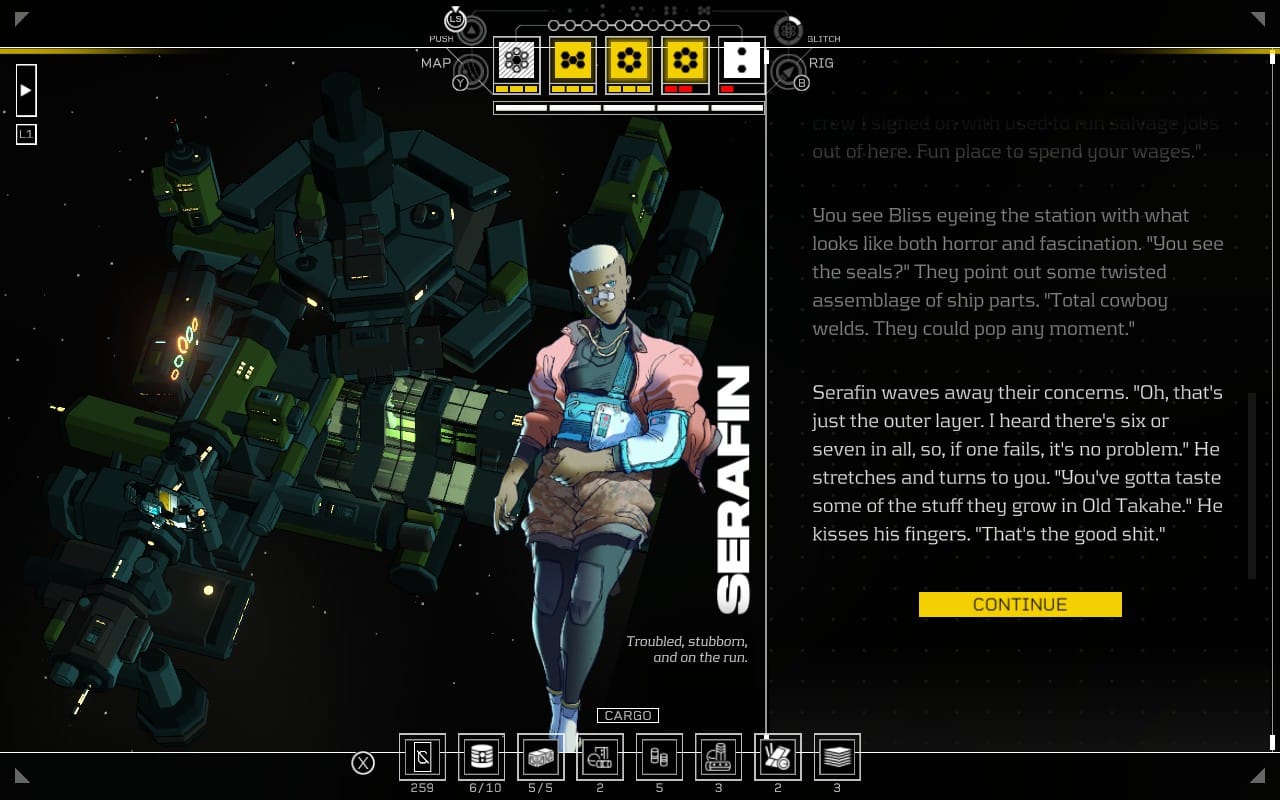
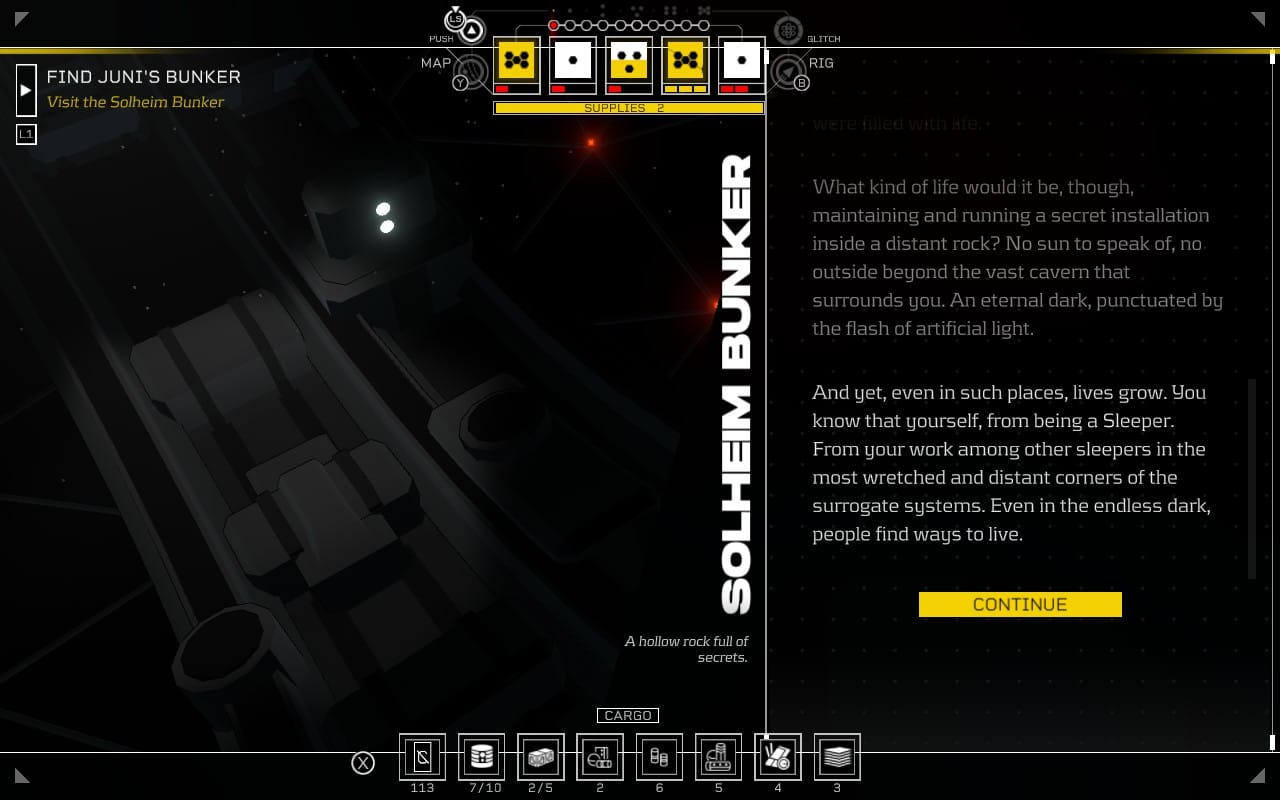
The first Citizen Sleeper was a powerful (if mechanically easy) dice-focused RPG along the same-ish lines as Disco Elysium where you play as a Sleeper, an android housing the consciousness of an indentured servant, who relies on a stabilizer drug to survive cycle to cycle. You spend the game drifting between gigs, making connections and trying to thrive on a scrappy space station. By the time the game wraps up, the station feels like a new home; filled with people who you’ve helped and have helped you.
By the time the DLC rolls around and newer existential threats to the station are added, they feel tangible because this station is more than a station. It’s a community. It’s a group of people all trying to make ends meet on the forgotten edges of a corporate dystopia, and the greatest resource these people have is each other.
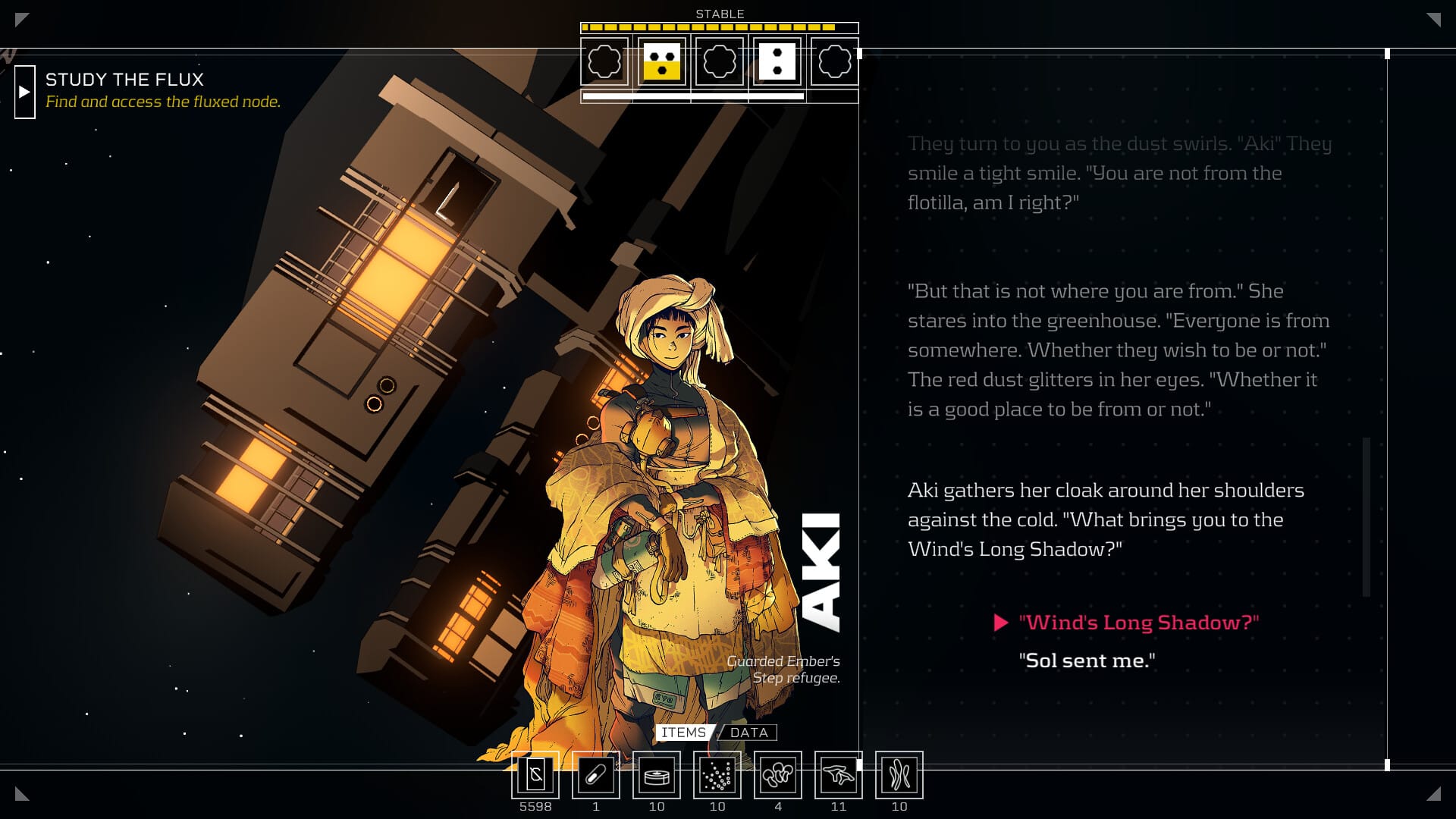
It’s a fantastic and beautiful work of cyberpunk fiction. In fact, I would argue it’s one of the best works of cyberpunk fiction. All of it. This is near the top. I firmly believe it deserves to be discussed in the same breath as works like Deus Ex, Blade Runner, Neuromancer, Snow Crash, and The Matrix.
A few newsletters back, when I wrote up a wishlist recommendation for Starward Vector, I mentioned that Citizen Sleeper embodies not just the cyber aspect of cyberpunk, but also the arguably more important punk aspect. Rebellion against vast systems that seek to use cybernetic technologies to put the lower rungs of society in a chokehold.
More conventional cyberpunk narratives paint this rebellion with a violent stroke. Snow Crash’s oppressors meet their ends in violent gunfights and explosions. Deus Ex ends with you directly killing its billionaire antagonist, whether you do so to replace him or to establish a new world order. A lot of it culminates with the main character acting as the direct catalyst in sweeping societal change.
But Citizen Sleeper is vitally different. The rebellion is still there, but it’s not in violent acts. It’s in communal benefit and mutual aid. It’s about meeting peoples’ needs, not by directly dismantling unjust power structures, but by smaller acts of solidarity. A favor here. A contract there.
It could be as simple as helping a gardening commune grow food, or as drastic as breaking into a derelict ship to recover a lost AI core.
The systems that govern society in the Citizen Sleeper games are unjust, but they are also unstable. Massive corporations rise and fall, and their husks litter the universe, free for people to salvage, claim, and take root, like a forest after a wildfire.
As the game’s corporations and superpowers decay and fester, it falls to smaller circles of ordinary people to pick up the pieces for themselves and try to live on.
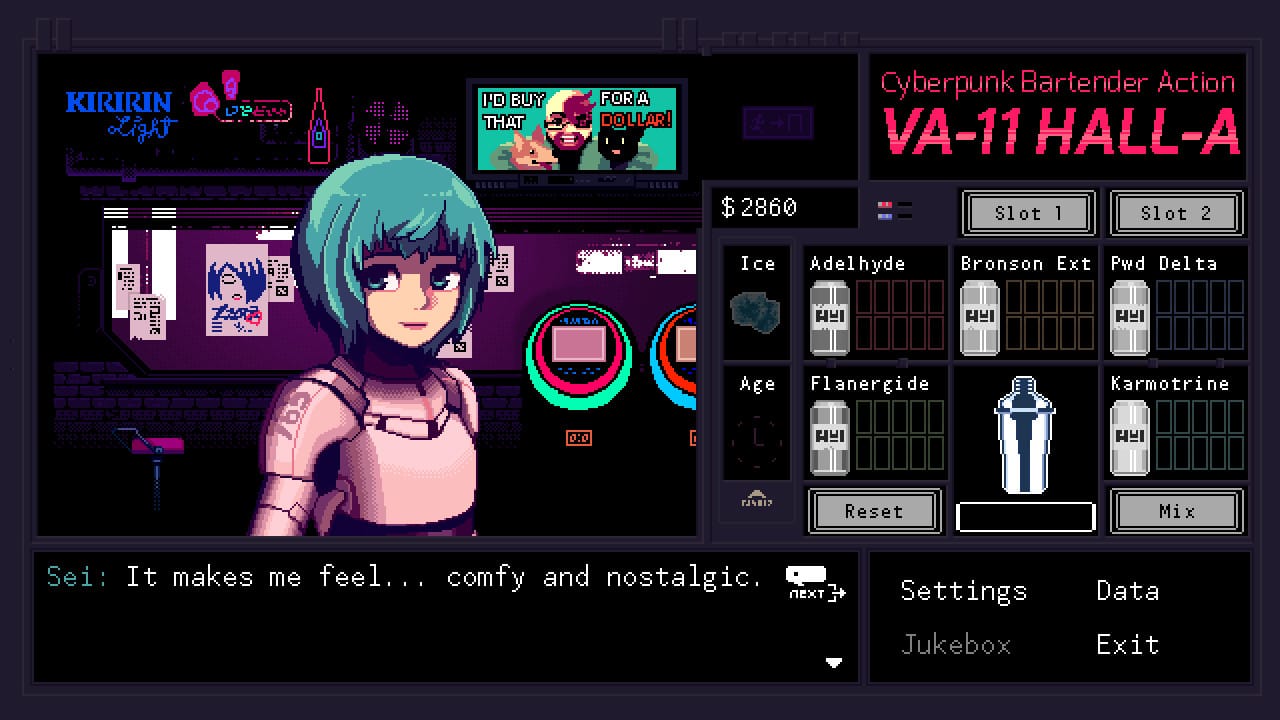
It reminds me a little of VA11-Hall-A: Cyberpunk Bartender Action, another game with an emphasis on making ends meet and forming friendships in a cyberpunk dystopia. The subgenre’s focus on hacking and violence can be so commonplace that it can be difficult to recognize its communal potential; that -punk fiction is as much about people as it is about rebellion. That people are the rebellion.
And it would be nice to wrap the newsletter up in a bow like that. The real cyberpunk was the friends we made along the way. It’s a wonderful sentiment, and it’s one I still hold onto and encourage others to do the same. But as the past few weeks have demonstrated, it’s not that simple.
Community is not, by itself, a cure for injustice. It can be something of an barrier, but injustice can break apart communities all the same.
I personally know a Ukrainian refugee who is facing real, believable uncertainty in the midst of recent federal upheavals. It’s nice to think that their community will stand up for them, and I have little doubt that they will. I know they have. But how much that will affect their chances of deportation in this landscape is anyone’s guess.
Many trans and non-binary people who rely on gender-affirming care are hoarding medication and uprooting their lives to move to more accepting states out of a fear of potential future policy, to say nothing of the executive orders already out in the open.
And though resources are being distributed vigorously online in an effort to warn immigrants of what to do in the face of ICE arrests, those arrests still come, and the hatred lurking behind those arrests is rarely hard to uncover.
Citizen Sleeper’s writing on class solidarity is so good that it’s easy to forget that the player is still living in a dystopia. That wars are fought and people are killed in the game’s world over large-scale corporate conflicts. Starward Vector takes place on the fringes of an active warzone. Mutual aid can only do so much when society’s seismic shifts are so titanic and overwhelming that they threaten everybody in some form or another.
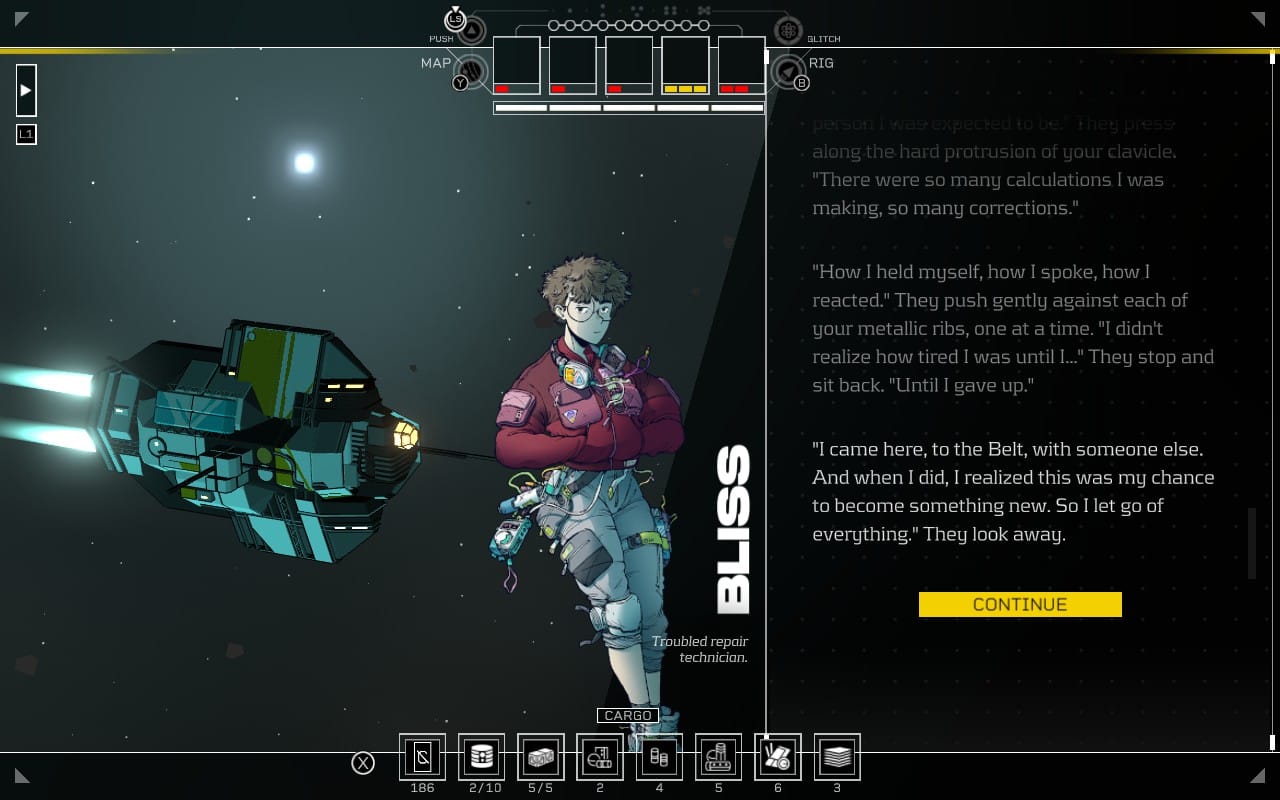
But I write all of this in a plea – partly with myself – to not let go of that sentiment. Because in our current cyber-world of upheaval and uncertainty, cyberpunk is, in fact, the friends we make along the way. Punk, as a culture, is not just protests and riots. It’s rest. It’s self-care. It’s mutual aid.
It’s community.
A community-focused wishlist rec
It feels fitting to wrap up this newsletter by recommending Promise Mascot Agency.
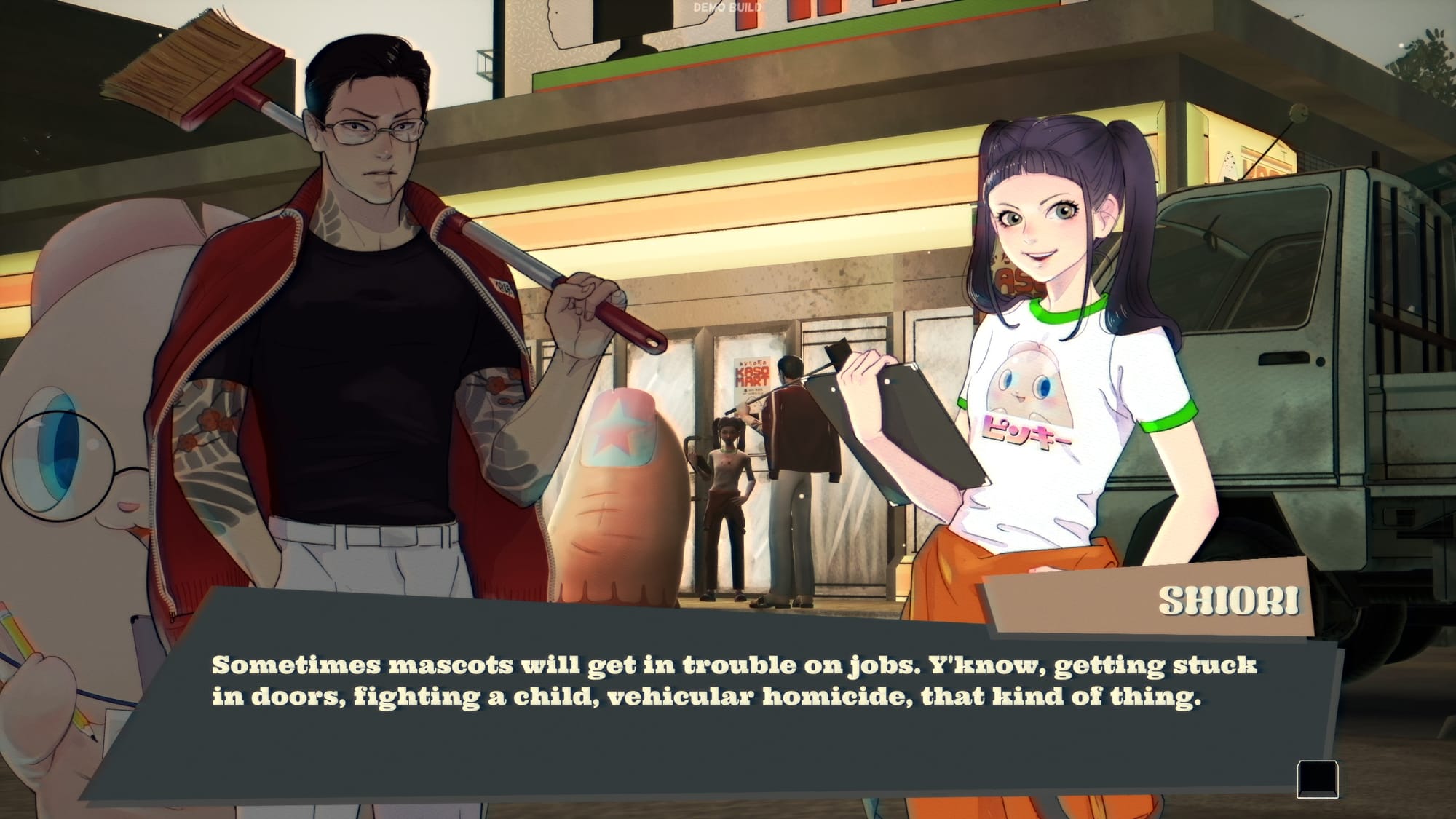
It’s not exactly an obscure upcoming indie; it comes from the developers of successful visual novel Paradise Killer and features high-class Japanese voice talent like Tayaka Kuroda (Yakuza) and even Swery65 (Deadly Premonition).
But the demo is a delight. It features an accessible job-management gameplay loop that sucked me right in, alongside a charmingly morbid sense of humor, a very effective PS2-esque artistic direction (with a convincing Showa-era TV filter on top), and a small open-world that’s fun to drive around in with an indestructible kei truck.
I bring it up here because for as much yakuza gallows humor as it offers, it is still effectively about building up the economy of a small, decaying community. It doesn’t take itself nearly as seriously as Citizen Sleeper, but it doesn’t have to be. It’s fun and rewarding on its own terms to prop up this little town.
Promise Mascot Agency will launch sometime this year on PlayStation, Xbox, Switch, and Windows PC via Steam and Epic Games Store. A demo is currently available on Steam. The game’s trailers imply that it will be Steam Deck verified, though the Steam page doesn’t explicitly confirm this.