
The SuperDQP Weekly - May 12, 2025

Phew. Alright. I’ve spent enough time talking about emotional hardships and mental illness. Time to write at length about a game that just rules.
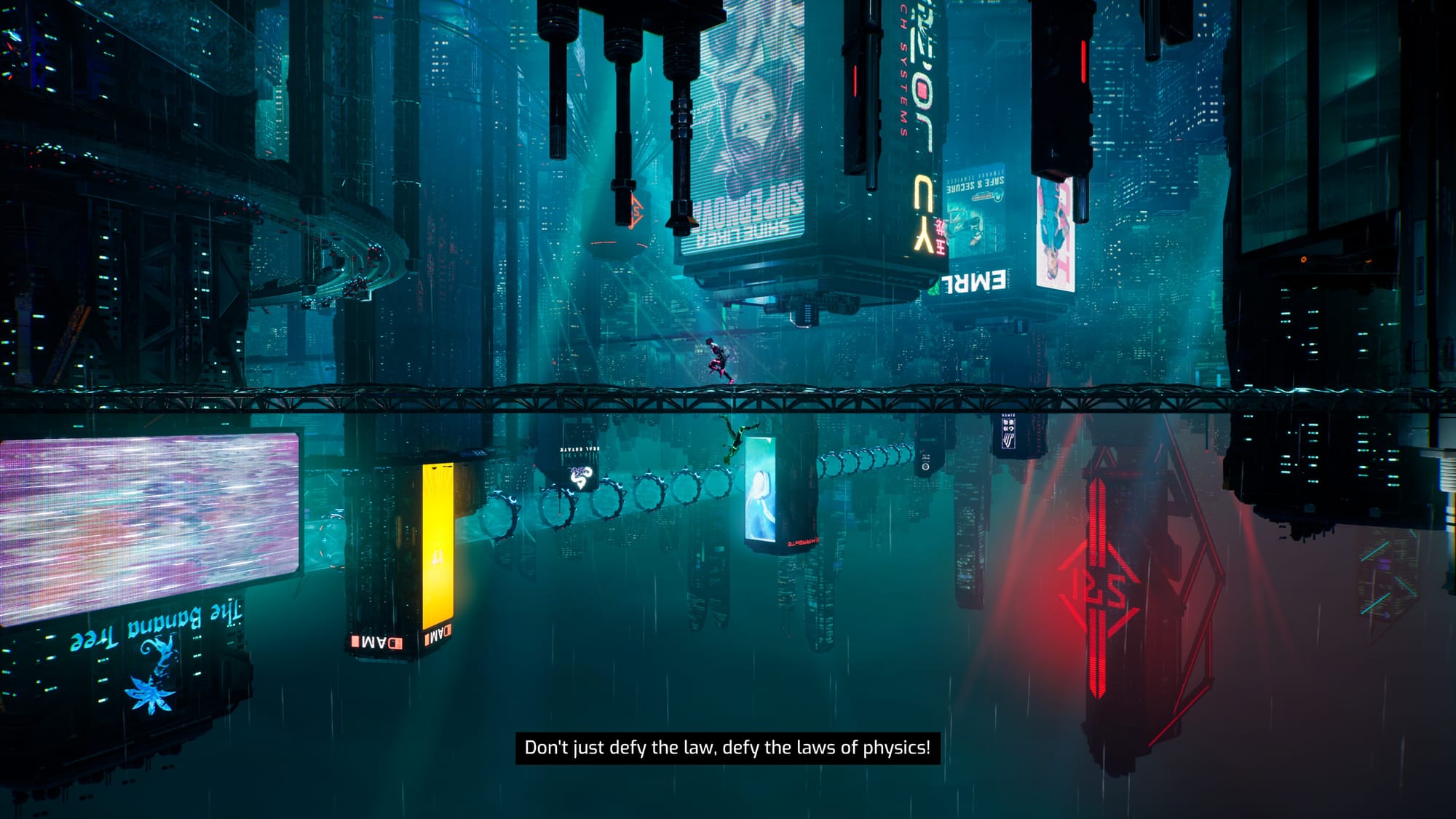
I needed this week’s game rec
This week’s recommendation got a lot of buzz last year, but in case recent games have drowned it out, I wanted to give it another shout out so people don’t forget to play it.
If you need an emotional pick me up and a reminder to keep going through life, I can’t recommend Neva enough.

I could mention that the game is an artistic tour de force, but honestly, I’m making this recommendation for those who are struggling emotionally right now. It’s by no means a feel-good or cozy game; it can often be bleak, scary, or traumatizing. But it resolves on a feeling of hope.
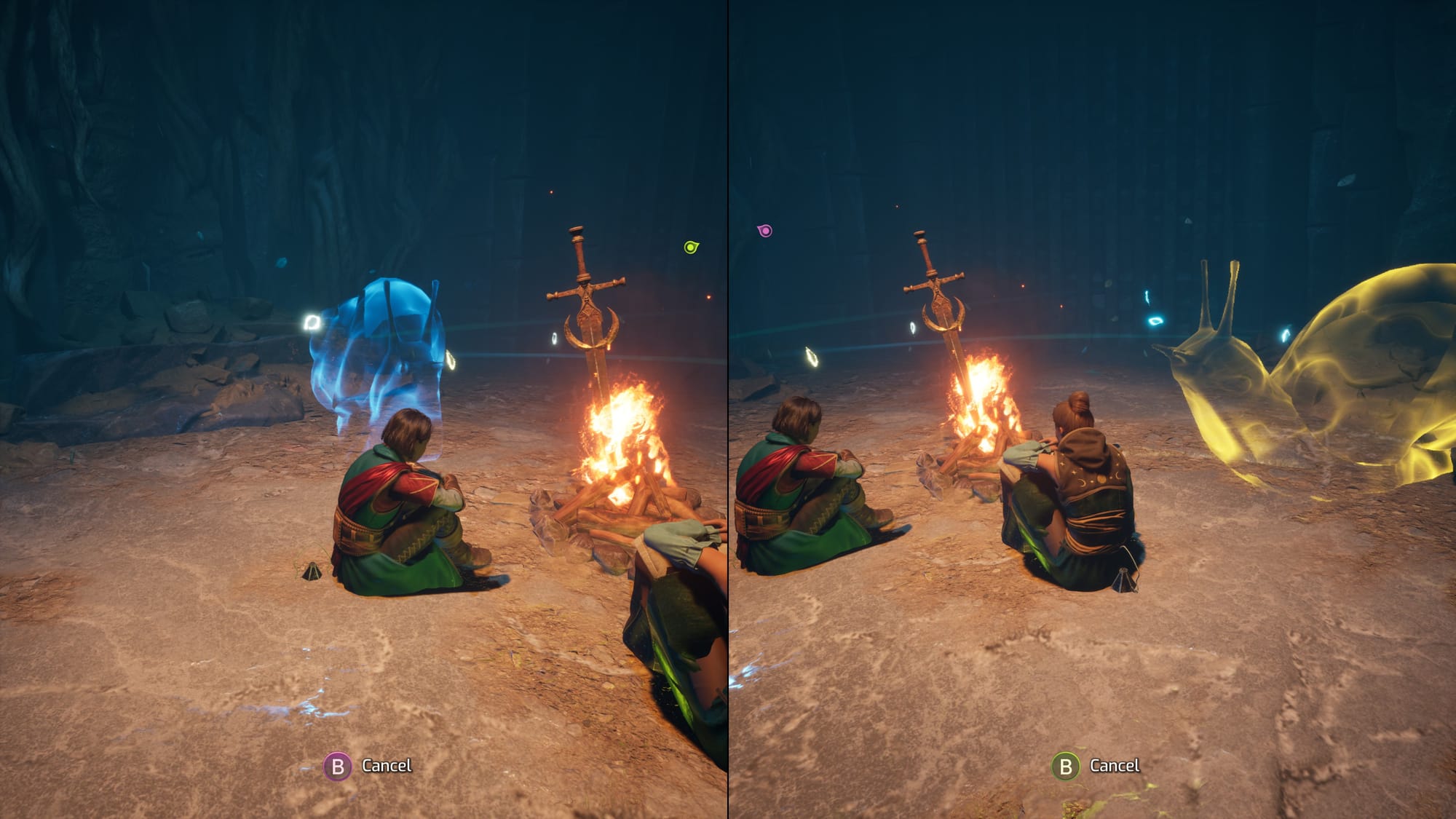
Each of the game’s four chapters is themed around a different season, and there’s this one shot at the end of the game’s “Winter” chapter (pictured above) that’s been my desktop wallpaper ever since I reached it. It’s an age-old but nonetheless powerful artistic motif; that winter always gives way to spring. That darkness and cold give way, inevitably, to renewal and warmth.
I can’t stress enough that if that’s what you need a video game to tell you, you need to play Neva. It’s short, to boot.
Neva is available on PlayStation, Xbox, Switch, Mac, and Windows PC via Steam. It is Steam Deck verified, and my experience on Deck reflected that.
He split my fiction until I (sentence deliberately left unfinished)
To the surprise of no one, Split Fiction is really, really good.
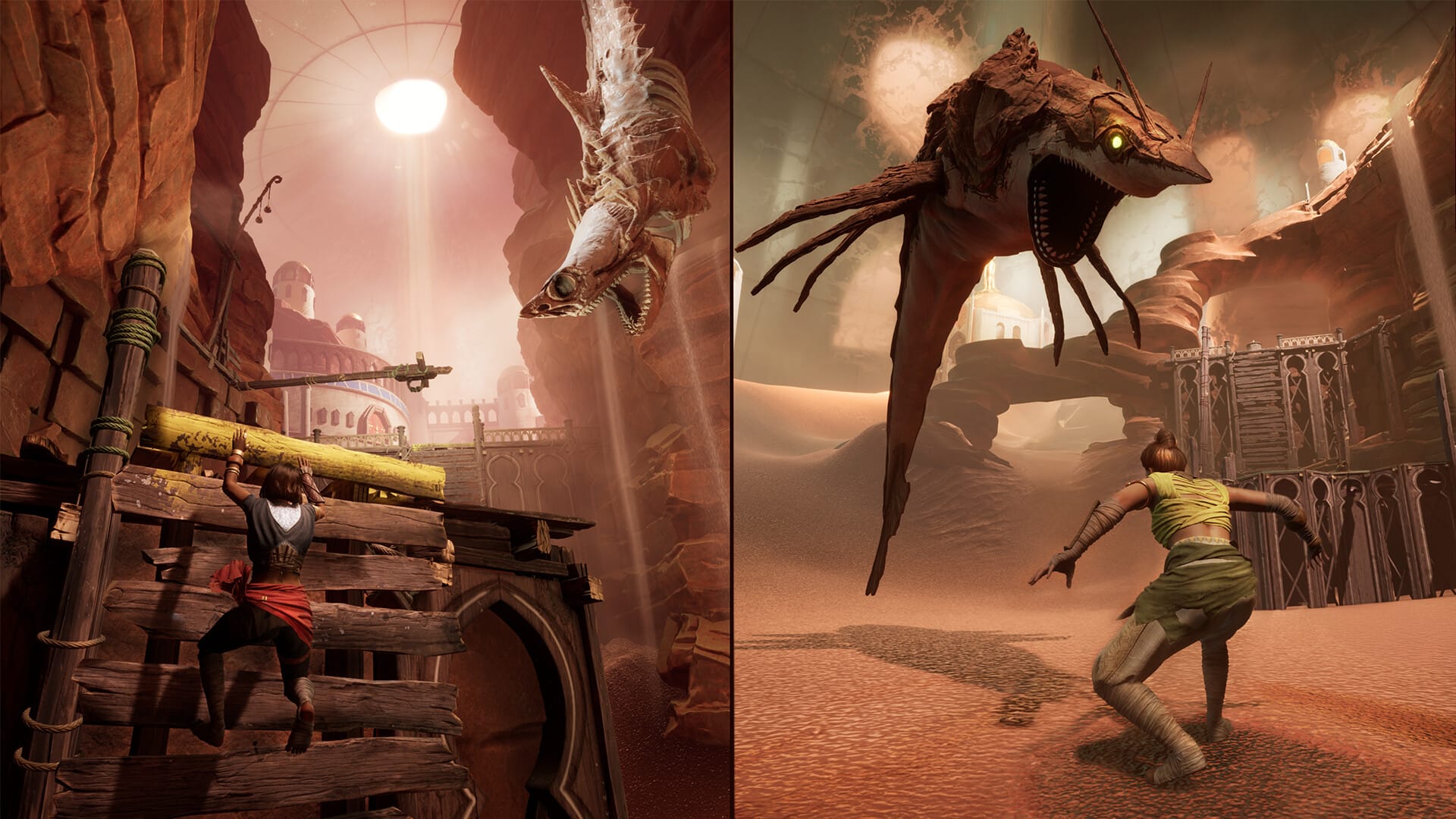
I missed out on Hazelight’s previous award-winning It Takes Two – I’m waiting for the right co-op partner to come along to play it – but me and a friend had previously played Hazelight’s A Way Out and were ready to play their latest.
We had a blast. It’s a simple, forgiving game with straightforward mechanics, but it weaves an interesting yarn about everything from death of the author to Jungian psychology to the process of literary inspiration, all in a wrapper composed of countless video game references and smarmy, riffy dialogue.
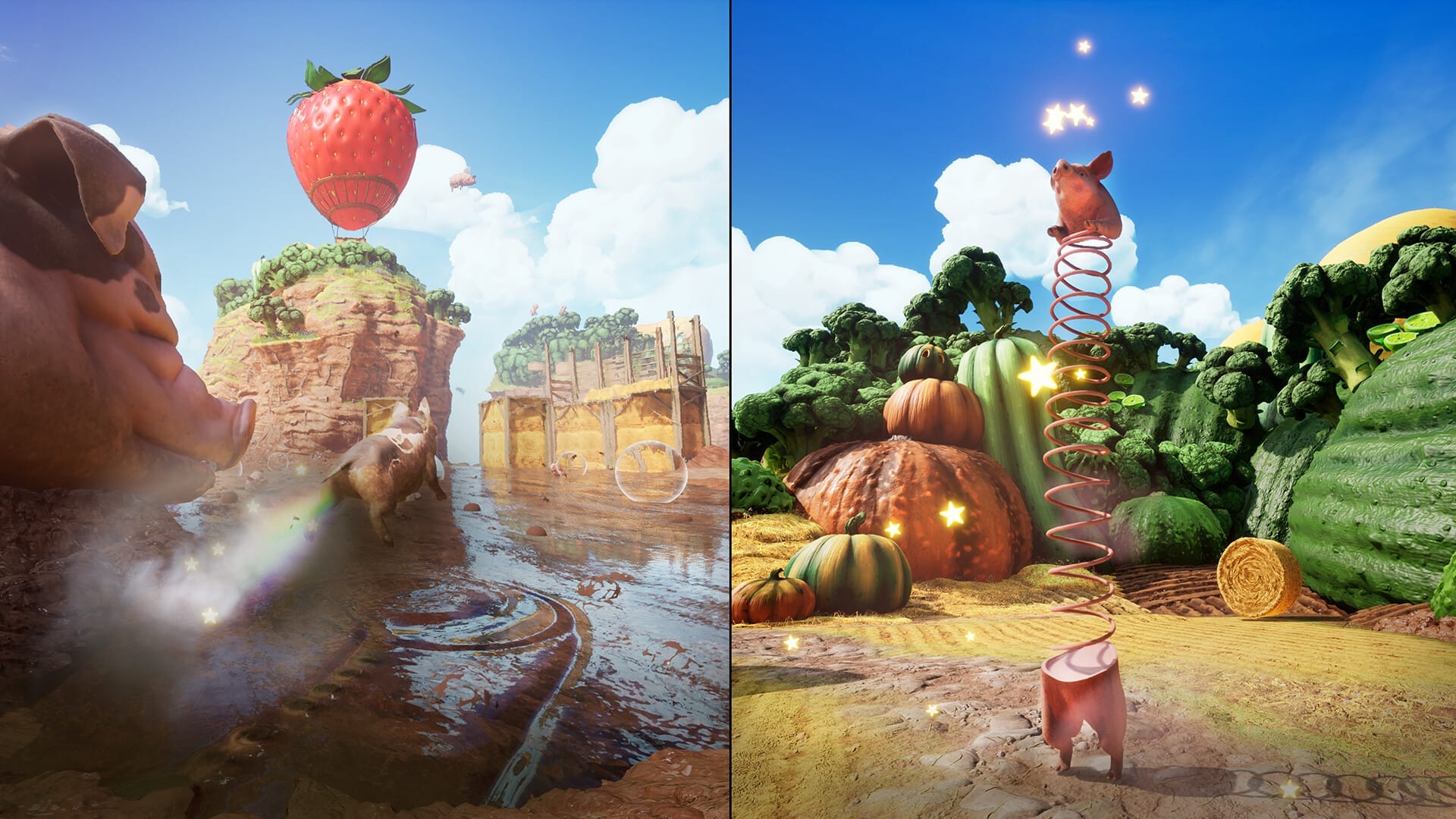
Also, you get to play as cute pigs at one point! More games should let you play as cute pigs.
(Dear co-op partner: I'm very sorry. I'm not sharing the context. He knows.)
Still, to my surprise, what primarily stuck in my mind after the game’s credits rolled wasn’t the co-op mechanics, extremely cool though they often are. (Seriously, the game does some bonkers stuff near the end that I wouldn’t dare spoil, but I had a devilish grin on my face for the entire finale.)
Rather, it was the game’s antagonist, the not-so-subtly named J.D. Rader.
Rader is the CEO of a publishing company with a new piece of technological kit that reads authors’ minds and generates worlds from them that people can virtually explore. The central story hook is that a sci-fi author and a fantasy author get their minds entangled together and have to venture through each other’s literary worlds in order to get back out into reality.
But there’s a sinister ulterior motive behind Rader’s machine: to steal the subconscious story ideas from the authors who use it in order to plagiarize and sell their work. Thus, the objective of the game ultimately becomes not just to escape the machine, but to break it.
If all of this sounds familiar, thank you for validating my thoughts on artificial intelligence! Surprise! I tricked you. This is what the newsletter is actually about.
Microsoft is the real offender here, but anyone who writes even a news post about the copilot "AI" Quake 'tech demo' without describing how it actually functions (or fails to) it is is doing unpaid PR work.
— austin_walker (@austinwalker.bsky.social) 2025-04-05T23:18:23.891Z
Generative AI is everywhere. It’s rendered entire social networks unusable, flooding them with automatically-generated slop. It’s become a central part of the current presidential administration’s media strategy, with AI-generated images of Donald Trump becoming centers of controversy with everyone from the Star Wars fandom to the Vatican.
Personally speaking, I share Hayao Miyazaki’s belief that AI is “an insult to life itself.” It fundamentally works by plagiarizing the works of writers and artists to generate soulless, often-incorrect content, easing the production of hateful and mocking propaganda, and slurping up unconscionable amounts of water and producing similarly-unconscionable amounts of CO2 in the process.
And many of the biggest tech companies on the planet want it everywhere! Google has frontloaded it into search results and integrated it into their phones – my aging Pixel 6 has been bugging me to use Gemini for months now. Meta and X have both embraced the tech, though at least Elon Musk’s Grok AI is smart enough to accidentally contradict him.
Elon Musk Fact-Checked by his own AI platform Grok! What an embarrassment this “genius” is.
— Rep. Jamie Raskin (@RepRaskin) February 27, 2025
For my full statement and questions posed to Mr. Musk, see below. https://t.co/8S6umluZgC pic.twitter.com/2NJNZv1JA7
YouTube has grown more and more unusable, with AI-generated or AI-assisted content showing up unprompted and, insidiously, unmarked in my recommendations.
Friends that I love dearly are pursuing ChatGPT for advice, taking its hallucinations as gospel, thinking of it as a tool instead of a plagiarism-fueled misinformation machine.
(Breathes for a moment, since the past few paragraphs all came out like someone barely on the edge of sanity venting to a friend)
So Split Fiction’s antagonist is evocative of all of this. It’s even in his name: he’s a raider, stealing writers’ work to train his machine to replace them.
Split Fiction’s machine represents a best-case scenario for generative AI: it recreates the writers’ worlds so perfectly that main characters Mio and Zoe marvel at how well-realized they are. And yet, it’s a force for evil. It’s a device for psychological thieving.
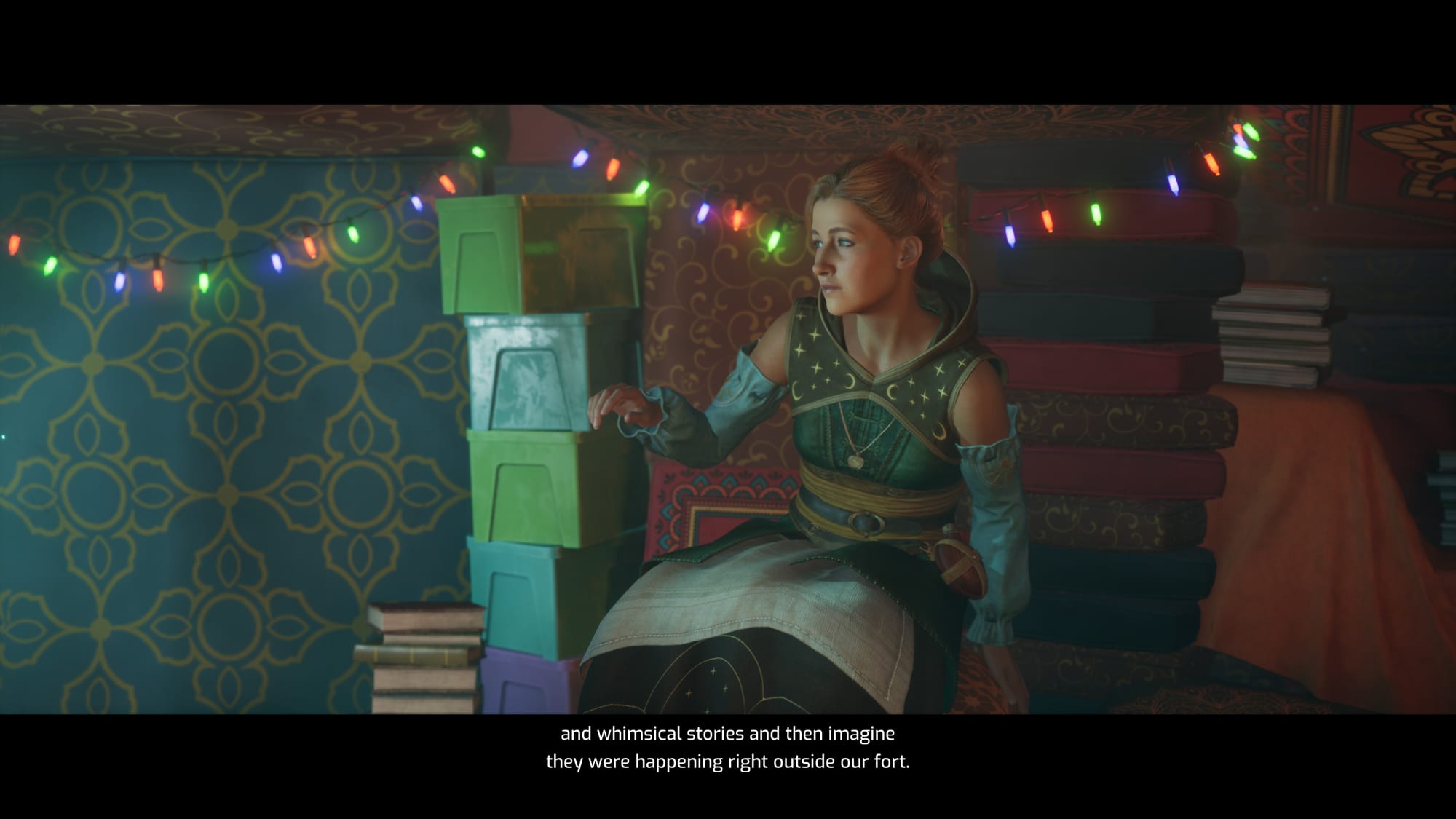
This made Split Fiction extremely cathartic for me to play. By the end of the game, I was overjoyed at the sheer creative energy that went into this game. It was a confident and fun stand against a real threat against artistic integrity.
Or at least, that’s what I thought.
Josef Fares, the game’s director, has taken a surprisingly neutral stance on generative AI given the game’s subject matter, telling VGC that “it’s both scary and very exciting. I believe at the end of the day, whatever new technology that comes, you should work with it and not against it.”
This is reflective of a lot of the rhetoric surrounding generative AI. It’s here to stay. It’s “the future.” It’s a part of society now.
Respectfully, I disagree.
Tech evangelists were saying the same things about the blockchain and the metaverse, and those two technologies have spectacularly petered out. President Trump’s own blatantly conflict-of-interest-inducing memecoin is an obvious scam. Meta has failed to build the Snow Crash virtual world that they promised all of society would move to. Blockchain technology hasn’t entrenched itself into video games despite constant claims that it would be “the future,” because it’s cost-prohibitive, volatile, and like AI today, consumes a ridiculous amount of energy.
To be diplomatic, I believe that Fares, like my aforementioned friends who consult ChatGPT, has bought into this futurist narrative; perhaps even that artificial general intelligence – AI that goes beyond what we know now as generative AI and into a more literal, sentient intelligence, like in the movies – is possible.
This is a large part of what is driving AI’s economic growth, and was also what fueled the blockchain and metaverse bubbles. Leaders in the tech space leaned into cultural sci-fi imaginations of what those technologies looked like in The Matrix or Ready Player One to suggest that the future was upon us. The expectation was that they would be as disruptive and beneficial as desktop computers were in the 1980s, or the internet in the 1990s. It’s a compelling story to believe in.
It is also, in my informed opinion, a false one. Much as I love Beat Saber, navigating a virtual reality “metaverse” is an absolute headache-inducing nightmare compared to browsing text in a web browser. Blockchain cryptocurrencies are too volatile and wasteful to be taken seriously as legal tender or valuables, so people largely don’t.
And in a similar fashion, AI is choking the internet with misinformation and lowest-common-denominator slop that makes Beavis and Butthead look like intentional high art. It is driving artists, journalists, and designers out of work, and it is inducing Salvadorian nightmares in the process.
AI as it is today is unsustainable. In spite of investor enthusiasm, it is losing companies money, demanding fundamental disposal of copyright law, pushing its users to flagrantly disregard the truth, and accelerating climate change to frightening new degrees. It’s a harmful, toxic bubble that is destined to explode. There is no long-term future with room for this technology in it.
Split Fiction’s punkish depiction of the machine as a tool for plundering our culture is a presently resonant one. I just hope people like the game’s director are capable of seeing that happen in real life.