
The SuperDQP Weekly - October 14, 2024
How did the Capital G Gamers get to be that way?

Welcome to this week’s edition of The SuperDQP Weekly! Today’s writing will discuss “gamer culture” as it has existed circa around 1993 to today, and as such, it will prominently feature a lot of toxic masculinity, Gamergate included. If you’re sensitive to misogyny and homophobia, you may want to skip the main body of today’s newsletter.
Thanks for reading The SuperDQP Weekly! Subscribe for free to receive new posts and support my work.
A Game Recommendation
While a lot of the gaming history in this newsletter’s body isn’t particularly rosy, there is a lot in that history that is worth celebrating, and that’s reflected in this week’s recommendation: Digital Eclipse’s Gold Master Series.
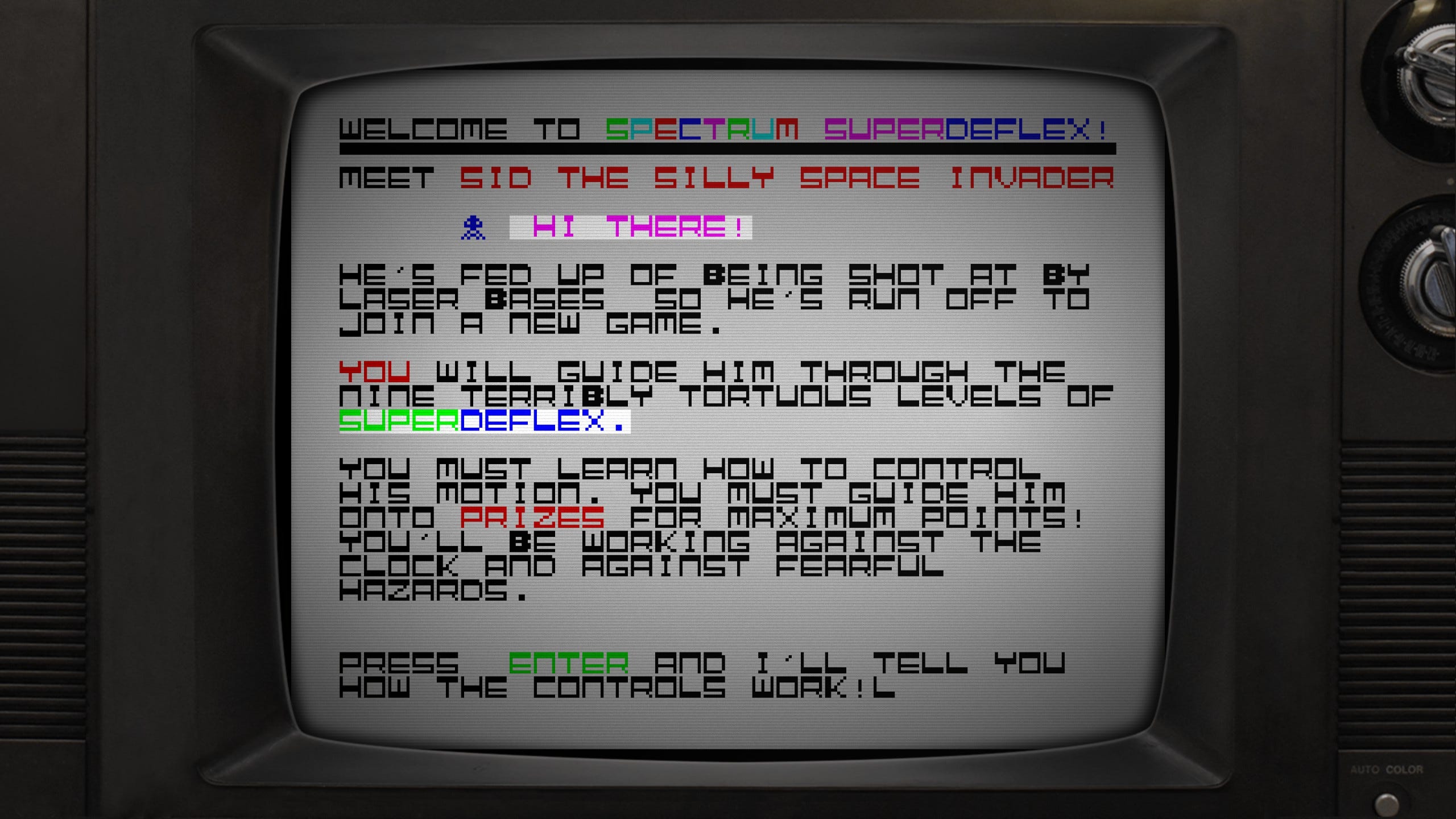
Digital Eclipse has done a lot of incredible work with game preservation in the past decade or so, including the Mega Man Legacy Collection and the SNK 40th Anniversary Collection. Their collections are packed with special features that provide historical context for the releases included, and for the Gold Master series, they’ve gone the extra mile to provide collections that aren’t just compilations, but full-blown playable documentaries.
The games themselves are products of their time, but through interviews, letters, photos, and interactive timelines, Digital Eclipse transforms developers’ bodies of work into human and personal stories. It’s a wonderful way to experience the history not just of the biggest games, but of the small successes and failures that the art form’s history is built on top of.

Also, some of the developers are real characters. Strange ones. In a good way. Sometimes.
The Gold Master series consists of The Making of Karateka, Llamasoft: The Jeff Minter Story, and the upcoming Tetris Forever, and while it technically doesn’t carry the Gold Master label, Digital Eclipse’s Atari 50 takes a similar approach towards presenting classic games.
All four games are or will be available on PlayStation, Xbox, Switch, and Windows PC via Steam. Llamasoft ran reasonably well on my Steam Deck, though I can’t speak for the other three on that front.
Recovering from “gamer culture”
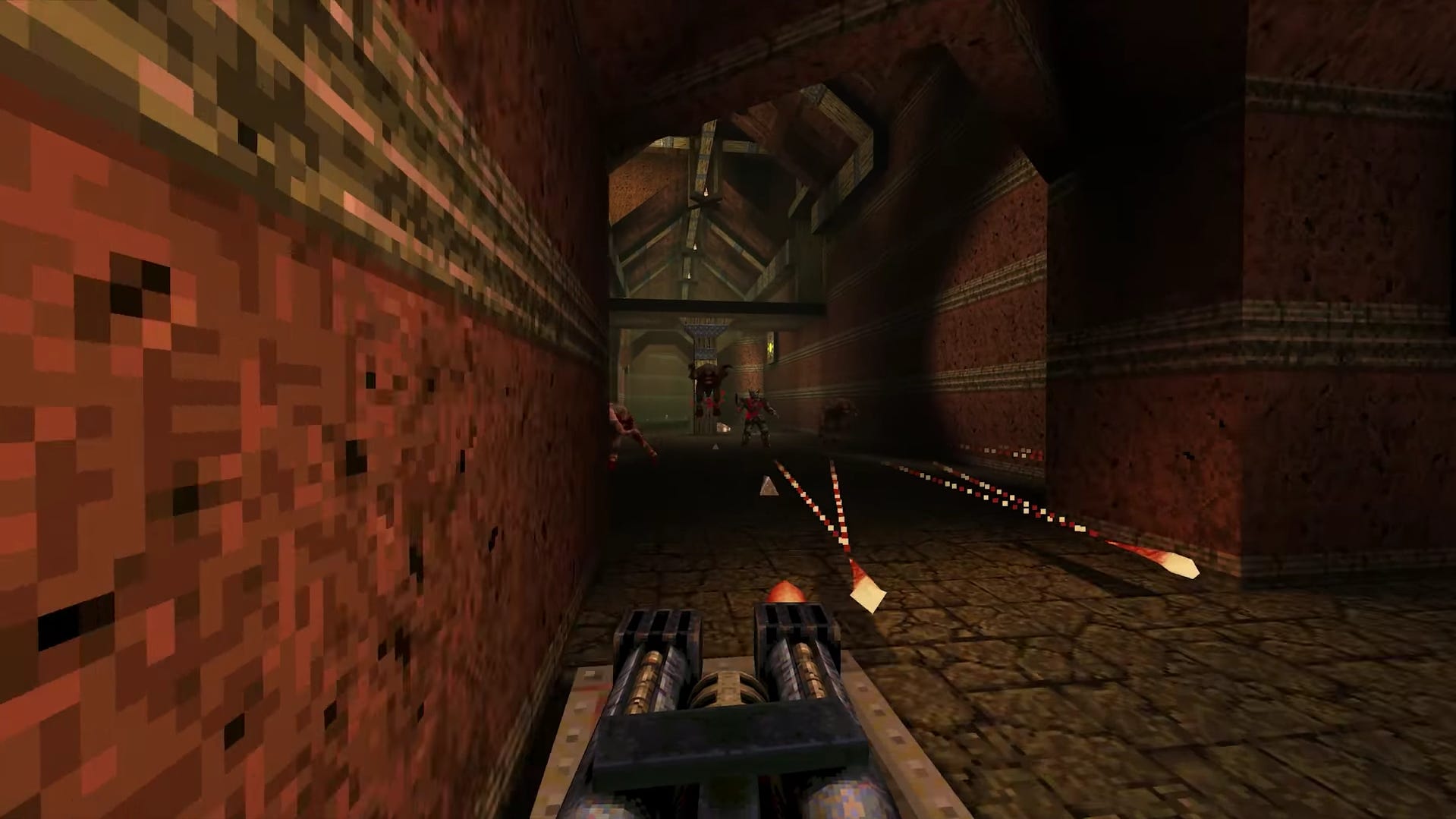
As I type this, I’m currently re-reading David Kushner’s 2003 book Masters of Doom, a biographical look at the inaugural developers at id Software as they moved from titles like Dangerous Dave and Commander Keen to the shooters that would make them famous, like Doom and Quake.
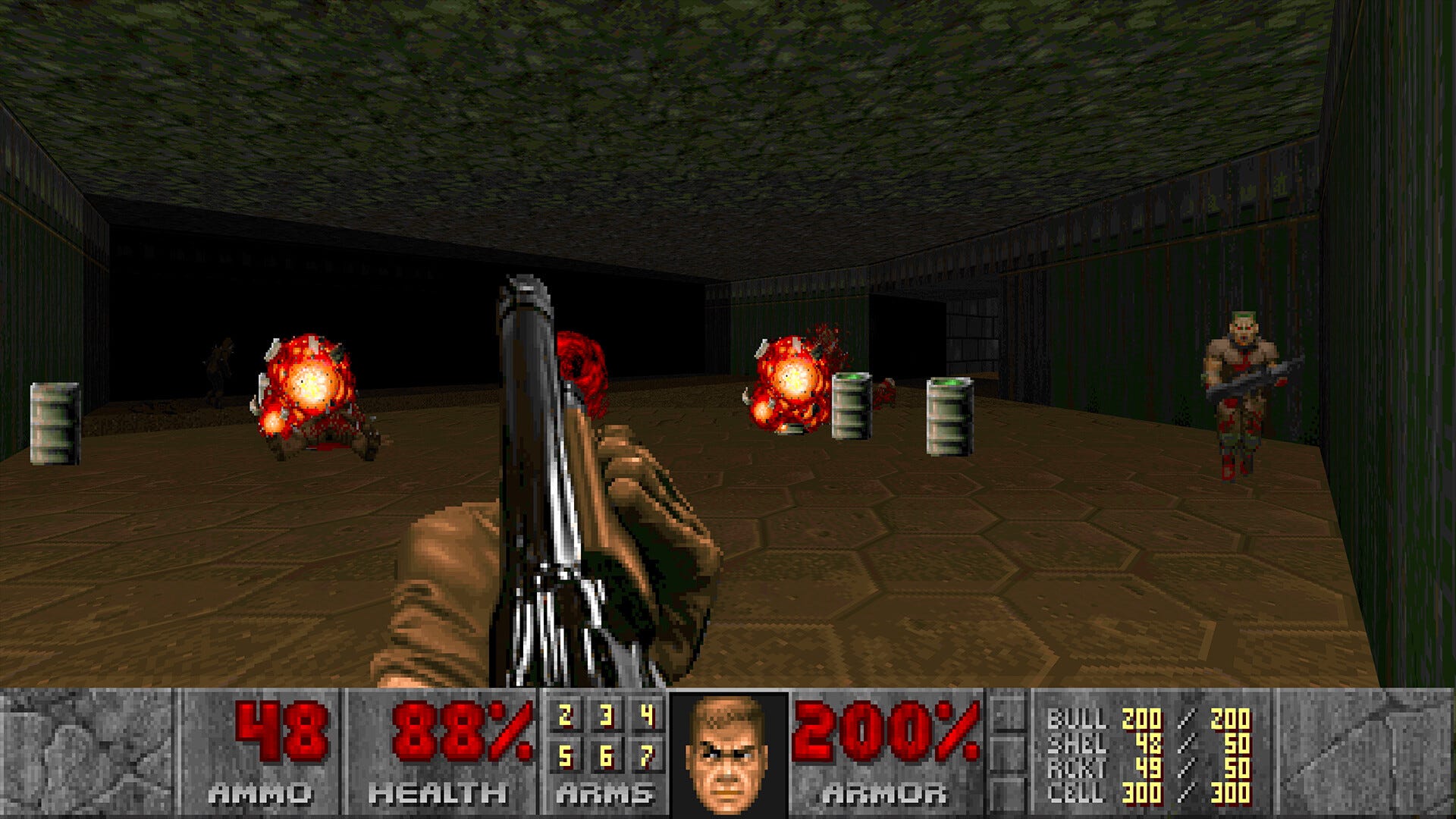
This reading was instigated by the recent Nightdive remaster collection of id’s 90s Doom titles, which I’ve also been replaying. But what inspired me to write this isn’t necessarily the contents of the book or the games themselves, but the style in which the book was written.
Masters of Doom is written with a target audience of gamers in mind. I use the word “gamer” deliberately, because the word carried different connotations in 2003 than it does now over two decades later.
Plenty of ink has been spilt on the impact of Gamergate on American culture. The 2014 internet harassment campaign marked a turning point not just in video gaming communities, but also, in my opinion, the very fabric of American politics. It was a “mask off” moment for video gaming audiences, where the toxic masculinity, misogyny, homophobia, and bigotry of “gamer culture” was exposed for the world to see. This bigotry was later exploited by the alt-right online as one factor that mobilized white nationalist voters to elect Donald Trump to the U.S. presidency in 2016.
In 2003, however, eleven years earlier, the word “gamer” carried more of a sense of defensive pride. Violent video games were the target of public scrutiny thanks to tragedies such as the Columbine massacre. Roger Ebert famously claimed that “video games can never be art.” There was an urgency among the medium’s fans to defend it as, well, that: an artistic medium worthy of respect.
This came to a head in the 2011 Supreme Court case Brown v. Entertainment Merchants Association (formerly known, humorously, as Schwarzenegger v. Entertainment Merchants Association; you had to be there), which struck down a California law prohibiting the sale of violent video games to children. Video games, as an art form, had won.
It is from that perspective that Masters of Doom is set: it portrays the developers at id Software as technological trailblazers, breaking the rules and defying the man at every turn to produce and escape into the worlds of their dreams.
And I grew up in that time. I felt the righteous indignation to defend the hobby I loved from the mobs who would deem it a scapegoat. I was a “gamer,” and I was proud.
The truth is, I’m still proud to be someone who enjoys video games. I think it’s a beautiful medium for quiet, loud, introspective, brash, and altogether fantastic art. But the label of “gamer” carries new undertones now. Uglier, more sexist undertones, that were simply taken for granted two decades ago.
Gamer culture was a different world back then, and reading Masters of Doom today is a harsh reminder of that; like peering into a timespace wormhole. id Software’s early days are depicted like that of a stereotypical frat house, with masculine power fantasies, porn-adjacent jokes at John Carmack’s expense, and empty pizza boxes and Diet Coke cans strewn about. The book uses masculine pronouns when talking about id’s target audience, referring to hypothetical gamers as “he” or “him” without a second thought.
Earlier this year, me and some online friends groupwatched Microsoft’s E3 2004 press conference. It’s a tradition we have each summer; to watch previous E3 shows and remember the spectacle, the games that would be hits, the games that would land with comical thuds, and the games that would simply never go on to exist. And it was yet another one of those reminders, as Peter Moore made sexist jokes to Jenny McCarthy that the crowd laughed at.
Gaming was, or at least was perceived as, a boy’s club; one that I would likely not be welcome at if I were as out of the closet in the 2000s as I am now. I’m non-binary and asexual, and when I think back to the crowded rooms in middle school filled with kids playing and spectating Halo 2 splitscreen, it’s very likely those kids would have laughed me out of the room if they knew I was queer.
And this wasn’t just true of video games. Most corners of American entertainment were outright hostile to women and queer people. They still are; Maureen Ryan’s recent book Burn It Down exposes systemic misogyny and homophobia that persists in Hollywood to this day.
Thankfully, reflecting on all this today, I’m heartened by how different the gaming landscape is now. Publishers correctly realize that the market is so much larger than the 18-34 male demographic that they aggressively targeted back then. Journalists are looking at sexual misconduct in gaming workplaces with increased (and necessary) scrutiny. Queer creators have so much more of a spotlight, as do queer audiences.
It’s not all sunshine and rainbows, and many game developers allegedly have yet to put their rhetoric about diversity and inclusion into practice. But it is, at the very least, pointed in a better direction.
And while there are still chuds who insist that gaming is still that boy’s club, there’s a sentiment that I keep seeing online that I find reassuring: that they are “tourists.” Misogynist and racist poseurs who care more about destroying “wokeness” (whatever that means in their heads) in all aspects of society more than they care about video games.
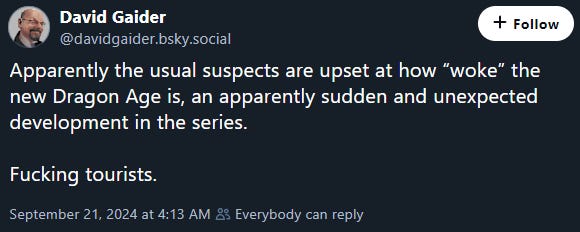
Is it an accurate sentiment? Probably not in its entirety. But it does make me feel better.
This isn’t to say that the game industry is now entirely without that stain of “gamer culture” as it was in the 90s and 00s. The art form is merely on a better path. It’s not “there yet.” I don’t know if it ever will be.
This is probably not exactly the future of games that John Romero or John Carmack envisioned in the 1990s, as written in Masters of Doom. But it is, at least, a future I feel more comfortable and optimistic living in. I’m certain there’s more terms to come to, as evidenced by the financial unsustainability that the industry is only now reckoning with. But I’ve never been more confident in this wonderful, weird, beautiful hobby that I’ve had since I was a small child playing Pokémon Crystal on their Game Boy Color.
A Wishlist Recommendation
Phew! Let’s cleanse our palates with a game recommendation that would turn these “tourists” beet red.
Classic 90s PlayStation aesthetics and game design are in vogue in the indie horror scene, with many new releases borrowing liberally from games like the first three Resident Evils, Silent Hill, and Dino Crisis. Just this year, we’ve seen Crow Country and Conscript get released to warm reception, and other recent games like Signalis have won many horror fans over, myself included.
Today, though, I’m recommending something a little bit weirder. Let’s talk about Sorry We’re Closed.
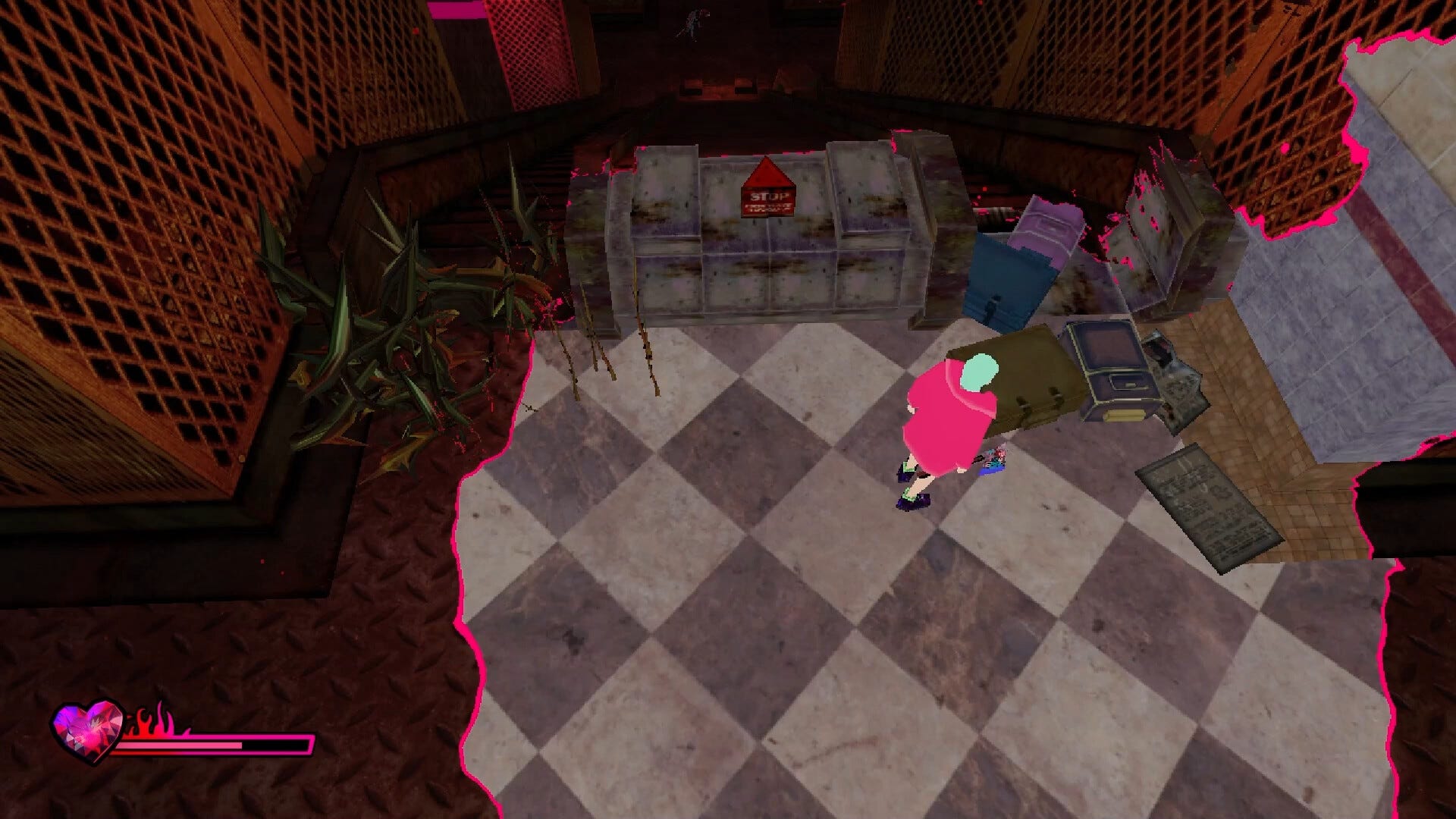
Sorry We’re Closed plays like Silent Hill on the surface, with a fixed-ish camera angle, backtracking, grotesque architecture and map design, and rusty, bloody surfaces throughout. But it adds an absurdist spin with its Third Eye mechanic: with a snap of the protagonist’s fingers, the player can open a small bubble around them to a brighter (but no less deadly) dimension, revealing enemy weak points.
Weapons literally snarl at you when you feed them ammo. There’s a sleep paralysis demon wearing impeccable makeup who regularly flirts with you.
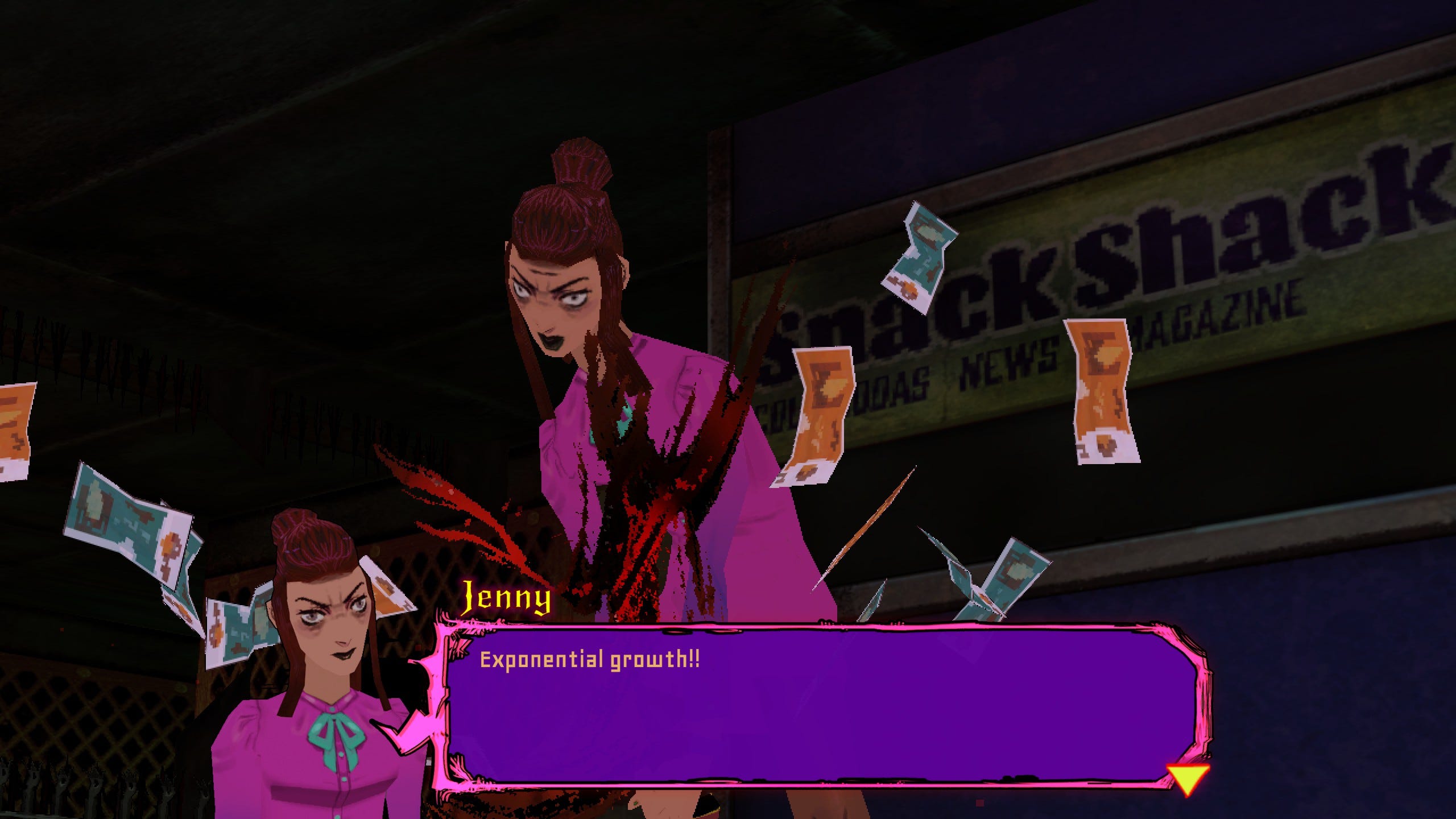
It’s a freaky, sexy, and queerly confident Killer 7-Silent Hill punk darkwave mixtape of a game, and I am so here for it.
Sorry We’re Closed releases on Windows PC via Steam, Epic, and GOG on November 14.
Thanks for reading The SuperDQP Weekly! Subscribe for free to receive new posts and support my work.