
The SuperDQP Weekly - September 15, 2025

Undertale is ten years old. Let's discuss.
An overproductive hiatus
A few months ago, I took a hiatus from this newsletter in the hopes that it would restfully kindle new ideas and rejuvenate my writing.
To be blunt, I was both right and wrong.
I spent much of this hiatus cracking away on a project that, if you know me personally, I’ve probably already gushed about. I will probably feature it in a future newsletter when it comes out. You’ll know it when you hear it.
While I hoped I’d spend that time playing more obscure games and demos to feature as recommendations, I wound up spending most of my time finishing Clair Obscur: Expedition 33 and Metaphor: ReFantazio; not to mention the hours I’ve already predictably sunk into Hollow Knight: Silksong. Not exactly the most obscure games out there.
(I mean, I guess Clair Obscur has it right in the title, but don’t be pedantic.)
Thankfully, it’s not like I’m out of writing ideas, and while my hiatus wasn’t as restful or unproductive as I’d hoped – how an autistic non-binary public media employee can find rest or productivity in this time of all times is still beyond me – I’m not upset at myself for taking it.
I guess that’ll be my recommendation this week. Take some time for yourself. Put down your phone, draw a bath, read a book, and do something for you. Tricia Hersey wrote that rest is resistance, and she is correct. Rest.
Well, rest after reading the rest of this newsletter.
A treatise on how not to have a bad time
As of yesterday, Undertale is ten years old.
There are doubtless many, many, many essays and articles on the topic within the past couple weeks, of which this newsletter is just one more on the pile. It’s difficult to find a fresh angle from which to tackle this game, just as it was ten years ago.
I’ll confess to being one of those fans back in the day. The game has the qualia of a cult hit in all senses of the phrase, even if the game too popular to qualify for the label. I was indoctrinated into the fandom through word of mouth in college – I heard about it from a classmate in a 400-level literature course – and it didn’t take me long after finishing the game to become annoying about it.
This annoying-ness has been at the forefront of my mind, because a close friend of mine has recently played the game for the first time. At time of writing, she is very nearly caught up on Deltarune, and there is an art to being eager and coy in her private messages without ruining the entire experience.
I say this with love: Undertale’s fandom is among the beastliest in popular culture. It’s not the most; Star Wars and Pokemon fans deserve their due credit for being newsworthily insufferable. But we Undertale heads give off a threatening, JoJo’s Bizarre Adventure-esque aura that becomes evident the moment we begin talking about the games.
One of the most dangerous things you can do in our vicinity is mention that you haven’t played the game. You will be swarmed and pressured in a way that will make you beg for the relative mercy of an awkward workplace conversation about how The Last Jedi was bad, actually.
It begs the question: how does one even talk about a video game to someone who has yet to play it? What’s the proper etiquette? Can the cultural pressure to experience a game blind render it more difficult – impossible, even – to want to experience it?
To that end, I actually want to bring up another game that pulls similar postmodern fourth-wall-breaking-with-a-point stunts as a discussion point: Metal Gear Solid 2.
I’m going to spoil Metal Gear Solid 2: Sons of Liberty for the next four paragraphs. I don’t think it will affect your enjoyment of the game if you haven’t played it, but just in case, this is your warning.
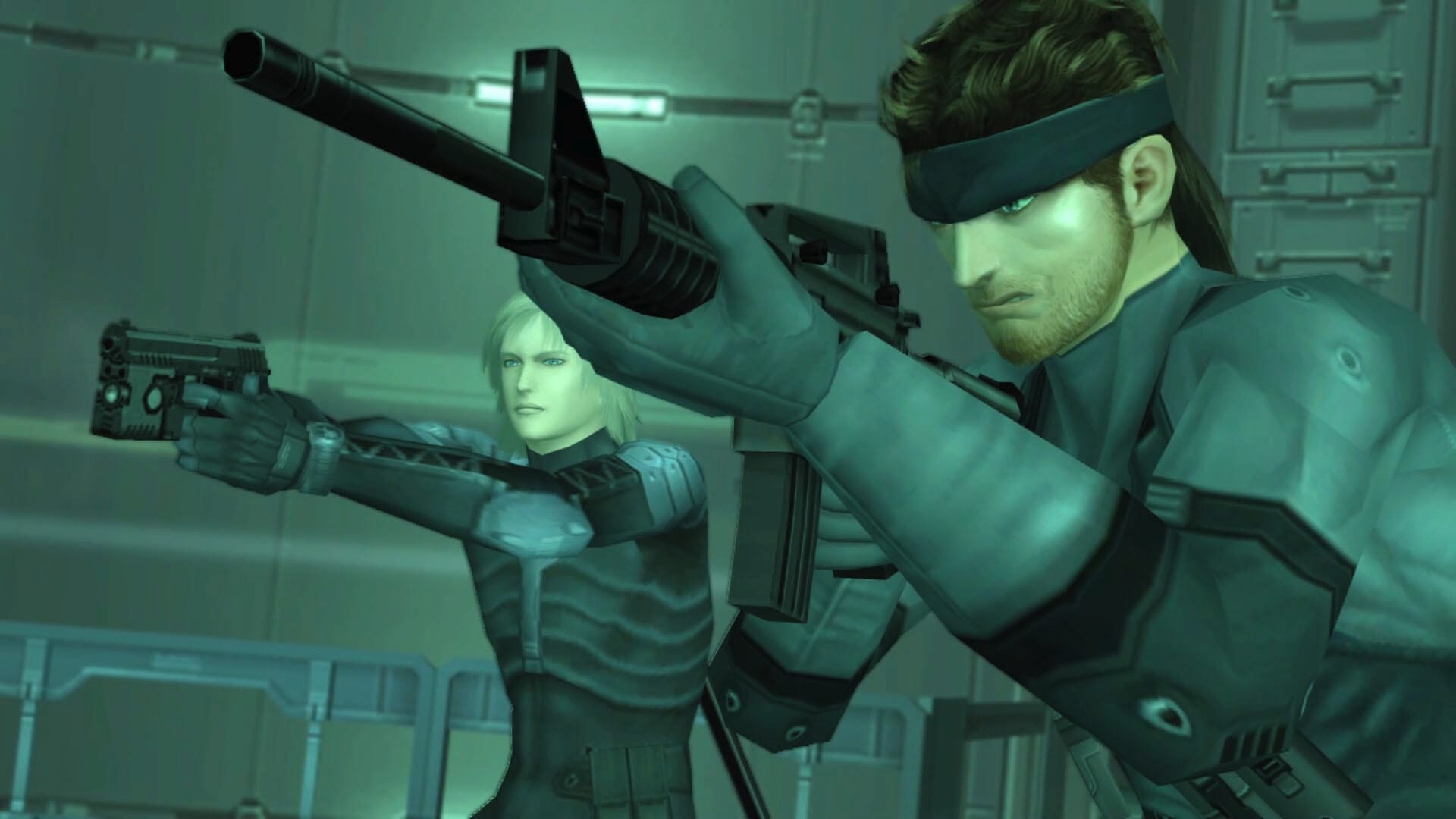
If you knew nothing about Metal Gear Solid 2 and asked someone about it, the first thing they’d mention off the cuff would probably be the political implications of its ending and how it more or less predicted the online echo chambers and dissolution of truth amongst slop moderated by AI that led us to our current moment.
This is a part of Metal Gear Solid 2’s most spoileriffic trick; using the player’s own excitement and knowledge of the first MGS to pull the rug out from under them and explore how fanaticism can be exploited for political and social control. It’s a twist that unfolds over hours of careful subversion and player emasculation. (Keep in mind that this was in the early 2000s and the developers assumed that most players would be cisgender heterosexual men.)
In the specific context of a hotly anticipated product for a new video game console in 2001, it is a brilliant judo throw.
In the context of 2025, it’s a relatively confusing mess that suddenly hits with haunting clarity as GW explains that the player’s world will end (or rather, has ended), not with a bang, but with a whimper, suffocated by artificial “truth.” So, when people explain the game to modern audiences, they often explain it twist-first, because it’s that twist that is more salient than anything to today’s culture.
Ten years on, what is most salient about Undertale’s legacy in today’s culture? Is it still this freak of nature that has to be experienced blind, as people might have said about MGS2 in the early 2000s, with annoying fanatics trying to push you as invisibly as possible towards certain decisions that will lead you to the most memetic parts of the game?
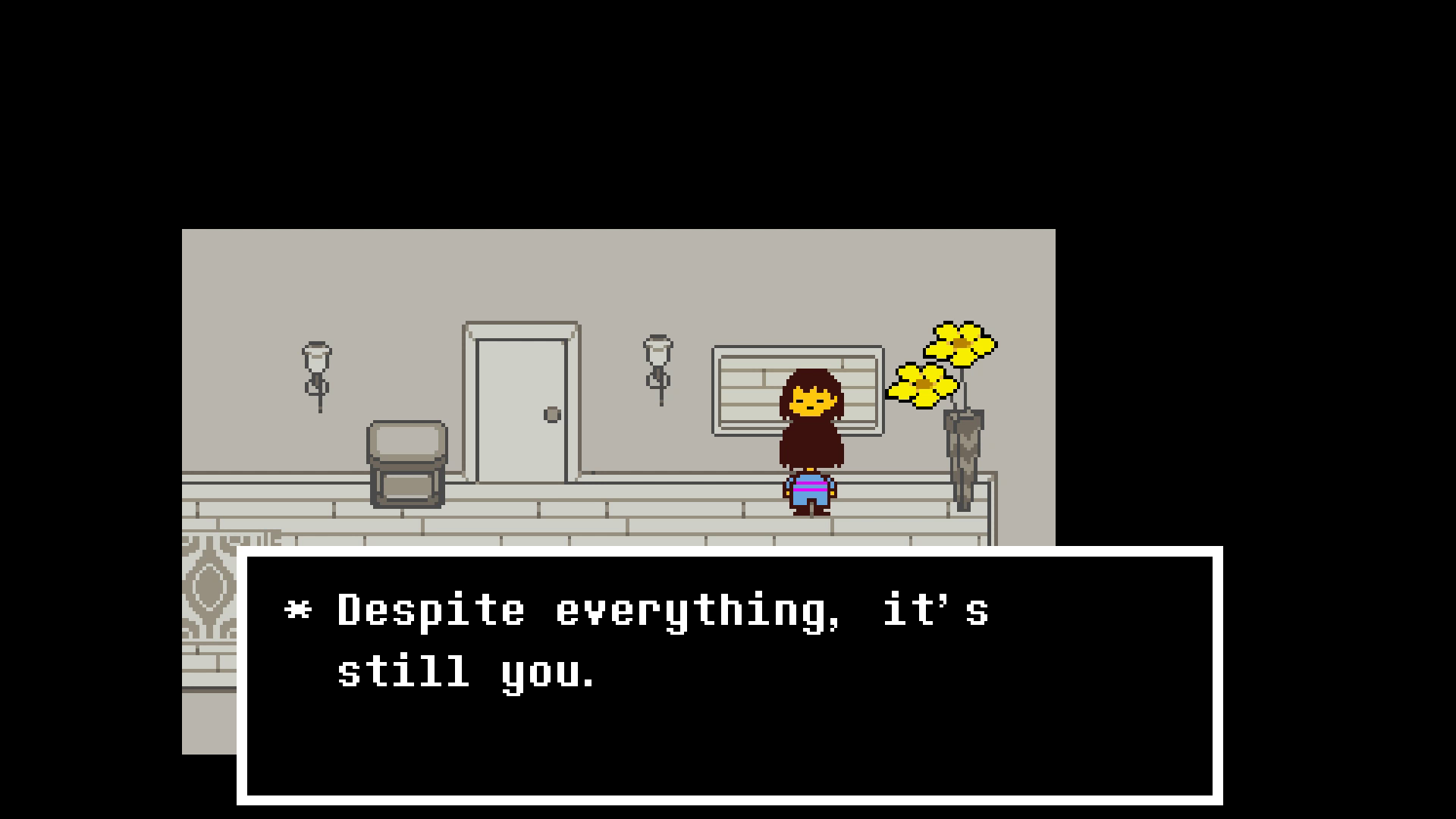
For Undertale specifically, I think we’re long past that. Enough of the game has seeped into the collective subconscious through cultural osmosis that anyone who hasn’t played it knows exactly how the fight against the funny skeleton man works. And besides, the most salient aspect of Undertale isn’t its fandom, in my opinion. It’s the screenshot below. But most of the other essays you’ve seen on Undertale’s anniversary have probably explored this more in-depth than I need to.
But I do think there are lessons to be learned from how Undertale’s fandom has handled the game in the days, months, and years since its release, because there are recent games that I think warrant that “you have to play it blind” label; Mouthwashing and Lorelei and the Laser Eyes being two recent examples that come to my mind. And yet, not as many people are going around fanatically asking people if they’ve played Lorelei and the Laser Eyes. (Aside from you, Matt.)
I think a part of the reason Undertale inspires this kind of behavior is because it touches so many people in a vulnerable way that other pieces of media just don’t. There’s a desire for connection, and to talk to others about this wonderful piece of media and communicate why and how it touched you, and a desire to preserve your exact experience for those others. And that desire can come across as obsessive and controlling to others who just want to see what the zeitgeist is about.
As for my friend going through Undertale and Deltarune for the first time this year, I’ve been content to let her experience the games on her own terms and let her become connected to the characters and world in ways that I didn’t expect or see. That other perspective has helped cultivate my own understanding of the games.
I think art is richer for having been experienced in a variety of ways by a variety of people with a variety of their own experiences to bring to the table. It behooves us to stand back and let those people experience that art in whatever way they need or want.
If that means someone is going into Undertale already knowing its deepest secrets, or Metal Gear Solid 2 not knowing the context in which it was released, or Hollow Knight: Silksong with the occasional walkthrough check because they forgot about a secret entrance they cracked open a couple hours ago and didn’t pass through (I’m talking about me here), then their experiences are just as valid as yours.
Happy tenth, Undertale. I hope Toby remains just as unhinged for the last Deltarune chapters as he’s ever been.